Politicon.co
Iran-Israel war in the Middle East: complications on conflict resolution and diplomatic balance
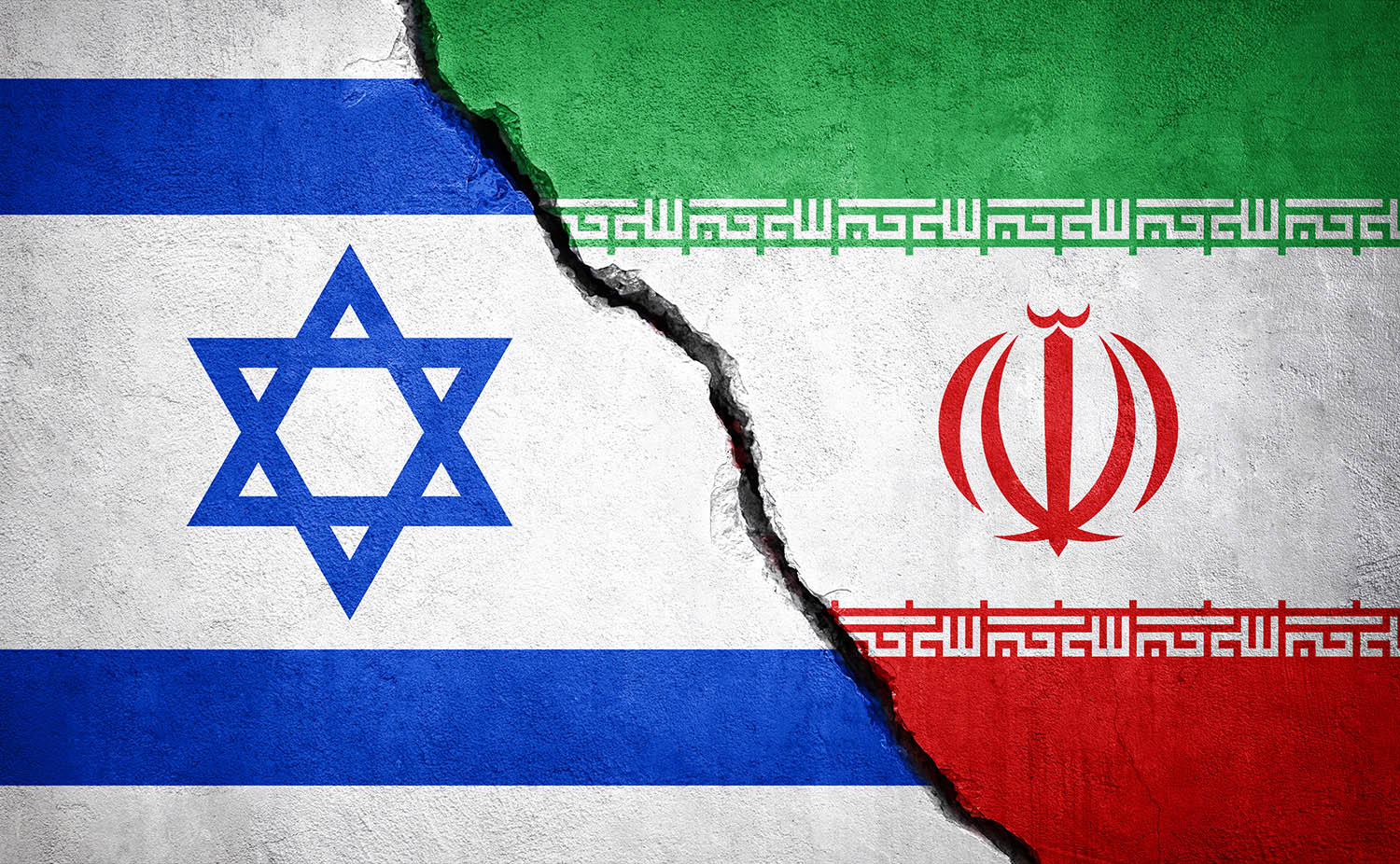
Iran and Israel could be accepted as the main countries in the Middle East because of their territorial primacy claims. Last few years world witnessed regular and consecutive tensions between Iran and Israel. The last escalation started on 27th of February and it was expanded on 28th of February. The confrontation took place after years of rising tension over Iran’s nuclear program, its ballistic missiles, and its military reach across the Middle East. Attempts to renegotiate a nuclear deal in 2025 and 2026 were unsuccessful. Meanwhile, Iran’s posture was in a weakened state after years of sanctions, recent destabilizing protests, damage inflicted during the 12-day war with Israel in June 2025, and the diminished position of Iran’s allies during the Israel-Hamas War (Britannica Editors, 2026).
However, first steps of Iran's Nuclear Program have been started at the beginning of 1950's. The main focus was to provide Iran with nuclear energy and strengthen alliances regarding the possible threats by former USSR and its allies during Cold War. It should be noted that the foundation of nuclear energy was established between Shah Mohammad Reza Pahlavi and President Richard Nixon. In the meantime, Iran joined Nuclear Non-Proliferation Treaty (NPT) in 1968 which provide an allowance for the nuclear program. Whereas, in 1979 the Islamic Revolution took place, and it reflects new upcoming changes. Some of different slogans were mentioned from the Leadership of the Islamic Revolution of Iran. One of them was about their targets which will be Israel. According to the research from Kibaroğlu (2007) the fundamental guiding principle of revolutionary Iran’s foreign policy was Imam Khomeini’s slogan ‘Na Sharq, Na Gharb, Faqat Jumhuri-ye Islami’ which means ‘neither East, nor West, only the Islamic Republic (of Iran)’. In the early years of the Revolution, almost anything Western was rejected, and the nuclear projects were no exception. According to Dr Haleh Vaziri, an Iranian scholar, Ayatollah Khomeini’s return from exile to Tehran on 1 February 1979 ushered in a brief but intense anti-modernization phase in Iran’s domestic and foreign policies. The clerics rejected the Shah’s plans to finance the rapid modernization of the civilian and military infrastructures with Iran’s oil revenues. In fact, they reduced oil exports, allowed much of the American military hardware purchased by the Shah to fall into disrepair, purged the armed forces of suspected opponents and did not impede the flight of many scientists who had worked on Iran’s nuclear projects (Kibaroğlu, 2007).
After that occurrence, Israel and Iran gradually began to become the main actors of conflicts in the Middle East. These countries threatened, struggled, and even fought against each other so many times. The last confrontation rose at the end of February, which had not seen before. It should be noted that USA is one of the most important actors like Iran and Israel in the progress over Middle East. It is connected with its global dominance from the economic, political, and military sides.
Emergence of Conflict and General Overview
1979 can be mentioned as a starting point of this conflict. After 30 years positive relations between Iran and Israel, Islamic Revolution altered interstate attitudes dramatically. The revolution, led by Ayatollah Khomeini, sought to spread the Islamic Revolution to regions deemed non-religious, which set the stage for a clash of civilizations, particularly against the West, which had established dominance in the Arab world, especially in the Gulf. Iran defined the U.S. as the “Great Devil” and Israel as the “Little Devil,” viewing them as primary regional threats. With the revolution, Iran's rhetoric against Israel became increasingly hostile, leading to deep disillusionment on the Israeli side.
Afterwards, the several occurrences emerged between these countries. Baltacı (2022) emphasize that the Iran-Iraq War that followed in 1980 marked a significant challenge for both countries. Iraq, under Saddam Hussein, feared Iran’s influence on Shiite groups in Iraq and its claims over the Khuzestan region, which contains Iran’s oil reserves. In 1982, Israel's occupation of Lebanon led to the emergence of Hezbollah, a significant player against Israel. Between 1985 and 2000, Hezbollah's attacks resulted in 256 Israeli soldiers killed and 840 injured. This success boosted Iran's focus on proxy warfare as a key part of its strategy.
In the 1990s, Iran’s pursuit of ballistic missiles and the Bushehr Nuclear Power Plant raised alarm in the West, especially in the U.S. and Israel, as they feared it indicated a move toward nuclear armament.
After the 9/11 attacks, U.S. interventions in Afghanistan and Iraq helped shift regional power dynamics. With the downfall of Saddam Hussein and the Taliban, Iran gained influence, enabling it to expand its reach. This, in turn, intensified Iran’s anti-Zionist stance.
Following Mahmoud Ahmadinejad's election as Iran’s president in 2005, Iran's hostility toward Israel escalated. Ahmadinejad threatened to annihilate Israel and actively worked to derail Israeli-Palestinian peace talks.
One of the essential occurrence was about assassination of Commander of the Quds Force, Qassim Soleimani in Bagdad, Iraq on January 2020 (Britannica Editors, 2026).
In 2022, further clashes between the two countries occurred, with airstrikes in Syria resulting in the deaths of Iranian military officers, and ruined the relations (Baltacı, 2022).
Geopolitical Rivalry and Diplomatic Crisis
Current existing conflict depends on political interests and ideological factors. Firstly, Israel is the target for Iran, in this parallel, Israel calls Iran as a main threat to peace and security. Mentioned details shape geopolitical dynamics not only for Iran-Israel relations, but also for political situation in the Middle East. However, different powerful states try to show their endurance for regional primacy. Except Iran and Israel Türkiye and Saudi Arabia are other remarkable actors in the region. Iran sought to expand its political influence from 1979 across the Middle East, which led to the geopolitical rivalry with Saudi Arabia. Driven by their conflicting ideologies and approaches to regional crises, Tehran and Riyadh have competed for leadership within the Islamic world. Core focus of Iran is to take the leadership and show Israel as a common enemy to the Islam. In this direction one of the main and undeniable issue is Palestinian-Israeli war. Iranian leaders view their defense of Palestine and opposition to Israel as central to enhancing Iran's standing among Muslim nations, positioning it as the "um-alqura" (leader of the Muslim world). Regarding the research by Roomi (2023), most Arab leaders have moved away from prioritizing Palestine, Iran continues to support Palestinian militants and threatens Israel, seeking to expand its regional influence. For Iran's theocratic leaders, this anti-Israel stance also serves to criticize conservative Arab states and rally their populations against their leaders, who have long been undermined by Israel's dominance in military, economic, and political spheres.
On this basis, Islamic Regime calls Israeli Zionism as a center power in the Middle East disasters. After securing power in Iran, Khomeini elevated the theological importance of Jerusalem to a much higher position than it had ever previously occupied in Shiite thought as a means of appealing to the largely Sunni Arab world and mentioned importance of freedom of those territories from Zionism. Furthermore, the Islamic regime continues to express its solidarity with the Palestinian cause through its symbolic designation of the last Friday of the holy Islamic month of Ramadan as Yom al-Qods (Jerusalem Day) (Jaspal, 2013).
In the political direction, Iran aims to obtain regional hegemony, weakens Israel and USA in those territories. At the same time, Iran understands its power and necessity for the region. Iran intends to become the only power center around Persian Gulf for controlling economic, political and regional dynamics. Because of that, Iran mainly controls and supervises Strait of Hormuz, and threat other countries to close there. Iranian Government knows that this is a spectacular advantage for them which arise economic crisis in oil trade around the world.
Although Iran does not have the legal authority to block the Strait of Hormuz, it can still employ various tactics to disrupt shipping. Throughout history, Iran has never fully closed the Strait of Hormuz, but it has resorted to actions like seizing ships and causing disruptions to assert political influence, especially during times of sanctions or heightened regional tensions. This is because Iran depends on the Strait of Hormuz for the export of oil, especially to its largest customer, China, which is also an important diplomatic partner. This makes them particularly vulnerable to any disruptions in oil flow through the strait. By using its control over the strait, Iran could pressure Western and regional actors to accept more favorable ceasefire terms, lift sanctions, or improve diplomatic relations. However, while this approach may offer short-term gains, it also carries the risk of damaging vital partnerships, particularly with China, which depends heavily on Gulf energy (Aman et al., 2025).
The final factor is Nuclear Program, Khan et al., (2019) mention in their research that predicting the precise outcomes of a nuclear-armed Iran is challenging. Some believe that the proliferation of nuclear weapons to more states would lead to greater global stability, arguing that irrational behavior would be diminished or exaggerated. However, another group of analysts contends that a nuclear Iran would lead to increased instability, further straining the relationship.
These nuances deepen the crisis in the region and maintain geopolitical instability. In the meantime, it would be impossible to discuss negotiations between Israel and Iran. Their approaches are not on the side of mitigation. According to current occurrences, it is hard to mention healthy diplomacy.
Challenges on Establishment of Peace and Security
Several obstacles can be mentioned about security and peace in Middle East, but most of them are typical as mutual claims between Israel and Iran. Iran sees Isreal Zionism, as a main threat, Mossad as an implementer of their purposes, and the influence of USA, in contrast, Israel notes the nuclear program, foreign relations with Russia and China, and essentially Islamic Regime in Iran.
Iran's existed foreign policy was formed during the 1980's. In the 1990s and beyond, despite adopting a more integrationist and non-ideological foreign policy, Tehran continued to align itself with politicized Islamic groups in the Arab world. On the other hand, Iran's Leadership focused on different direction with various purposes. It actively supported several movements, including Hezbollah in Lebanon, the Front Islamique du Salut (FIS) in Algeria, the Turabi regime in Sudan, Hamas and Islamic Jihad in Palestine, the Muslim Brotherhood in Jordan, the al-Nahda Party in Tunisia, and the Jihad group in Egypt (Ehteshami, 2002).
Peace and security depend on several factors in the Middle East, but Israel-Iran relations are first it that list. 28 of February the new war emerged between Israel and Iran, meanwhile United States supported Israel and struck Iran. Other countries in the regions have no potential to stop this war according to their initiatives. During this time Supreme Leader of Iran Ayatollah Ali Khamenei was killed, and different facilities were subjected to regular rocket attacks there (Center for Preventive Action, 2026).
Sustainable conflicts, and lack of diplomatic relations, ruin regional balance in the context of peace and security establishment. It also weakens economic growth and suspends strong political expansion. All in all, there are several spectacular ways to build peace. Jawad et al. (2025) especially focus on social policy for peace initiatives. Regarding the primary concentration of that research, it can be understood that social policy as a route to peace do not exist in this region as well. Additionally, the UN Human Rights Council (2026) mentions their concerns and calls the sides to protect human rights.
Conclusion
In conclusion, current escalation reflects future possible confrontations in the Middle East. Israel and Iran will be the leading actors in center of those tensions probably. It is also a conflict of interests in terms of their primary purposes. Now, mostly seen issue consists of nuclear program of Iran and struggle of Israel against it alongside USA. If one of them mitigates their own interests to reduce escalation possibilities, it will be the time to talk about diplomatic contribution which will be the way for peace and security. However, according to historical occasions and theoretical factors, a realistic approach is not fit for this opinion.
Another important point is the insufficiency of its activity from the United Nations. During the Iran-Iraq war (1980-1988) the United Nations understood that the war was not going to finish, thus UN Peacekeeping forces arranged to the Iran-Iraq border for concluding the war. Now, the war between Iran and Israel continues, even if it creates danger to the neighboring countries. Indeed, it is impossible to emphasize the efficiency of the United Nations in this critical situation.
Eventually, the war is going ahead, and some sources discuss that the end of the war is closer. Their claims show the end of nuclear weapon acceptance. It must be remembered that when the Manhattan Project was started, the motto was ''Nuclear Weapon – the end of all wars''. Today, the scenery is different – there is a war happening over the acquisition of nuclear weapons.
References
- Aman, A., Khalid, F., & Ara, R. (2025). The Iran-Israel Conflict: A Struggle for Oil, Missiles, and Power-The Geopolitical Battle Unfolds. Journal of Politics and International Studies, 11(1), 55-64.
- Britannica Editors. (2026, March 7). Qassem Soleimani. Encyclopedia Britannica. https://www.britannica.com/biography/Qassem-Soleimani
- Britannica Editors. (2026, March 11). 2026 Iran conflict. Encyclopedia Britannica. https://www.britannica.com/event/2026-Iran-Conflict
- Center for Preventive Action. (2026, December 12). Iran’s war with Israel and the United States. The Council on Foreign Relations. https://www.cfr.org/global-conflict-tracker/conflict/confrontation-between-united-states-and-iran
- Ehteshami, A. (2002). The foreign policy of Iran. The foreign policies of Middle East states, 285, 36-40.
- Jaspal, R. (2013). Anti-semitism and anti-Zionism in Iran. Israel Affairs, 19(2), 231-258.
- Jawad, R., Plagerson, S., & Jaskolski, M. (2025). A critical review of the state-of-the-art on social policy, conflict and peace in the Middle East and North Africa region: Why social policy matters for peace and why it is also not enough. World Development, 187, 106861.
- Khan, R., Muzaffar, M., & Khan, I. (2019). Iranian Nuclear Program: Impacts on Saudi-Iran Relations. Pakistan Social Sciences Review, 3(2), 54-64.
- Kibaroğlu, M. (2007). Iran's Nuclear Ambitions from a Historical Perspective and the Attitude of the West. Middle Eastern Studies, 43(2), 223-245.
- Roomi, F. (2023). The Iran‐Israel conflict: An ultra‐ideological explanation. Middle East Policy, 30(2), 94-109.
- UN Human Rights Council. (2026, March). A/HRC/61/60/AUV: [Report of the independent international fact-finding mission on the Islamic Republic of Iran]. United Nations Human Rights Council. https://www.ohchr.org/sites/default/files/2026-03/a-hrc-61-60-auv.pdf
- REGIONS :
- Middle East and North Africa
About The Author
jpg-1780401850.jpg)
Anar Rasul
Anar Rasul is a Baku-based researcher. His main interest is Middle East.

png-1773130770.png)
jpg-1599133320.jpg)