Politicon.co
Possible Outcomes of the Iran War, and effect on Türkiye
Introduction
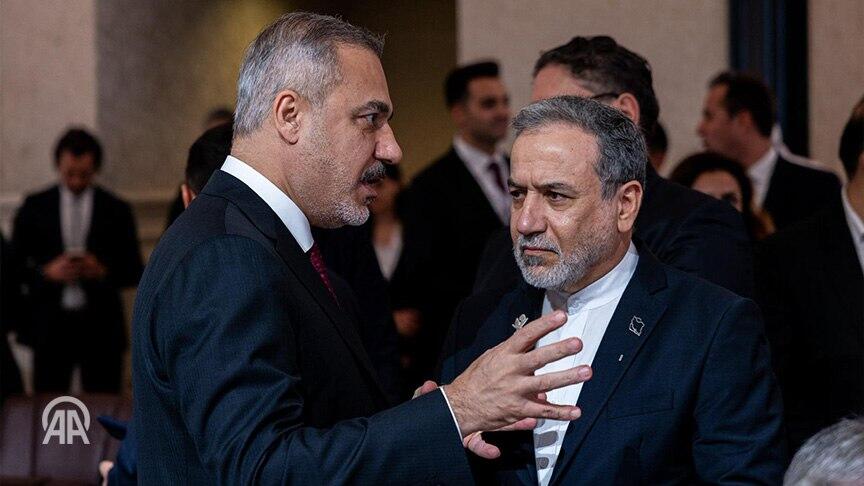
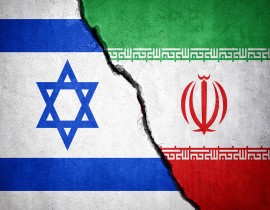
The long-anticipated conflict between Israel/USA coalition and Iran has started at the beginning of the month. This conflict was talked for almost 2 generations, speculated as the end of wars in the middle east, and standoff between two ends of the theological spectrum of Abrahamic history. While this war can be seen by eschatological means, reality shall not be overdriven. Furthermore, for the surprise of some western politicians, Iran standing off quite well in the first wave of “Shock and Awe”. It is shown that Mullahs are better prepared than the Ba’athists.
End game of the war has not been publicized, and one of the main reasons is that the Iran did not give the expected response to the killing of Khamenei. D-Day of the middle eastern ballistic war changed the course, plans and tactics of both sides. In this essay, we will discuss about some possible scenarios of the end of the Iranian war, and try to show the possible end-game of the war.
Main Possibilities
In this essay, we are not going to suggest or to foresee how the war will go tactically, or how long it will take. Nor will we make guesses about the economic impact on the global market of the ongoing days. We will simply discuss three possible scenarios that could happen before the 4th of July.
This "Independence Day” is particularly important. Iran war anticipated to end at most a month, and with the winning of US side, the country may enter the 250th year of its founding day as victories, therefore, can gain a popular swift for the upcoming mid-term elections. Also stabilizing half of the oil flow of the world, the US can gain economic leverage for the upcoming years. For this reason, it is expected that the US will try to finish the war before that day, both for the said benefits and to not anger the already strained US intra-public relations. Therefore, the next NATO summit is at Ankara/Turkey, which is the NATO frontline to Iran.
With that said, there are countless speculations about the ongoing conflict. One important thing is that, the cold war era is ended, and “realpolitik” died with Kissinger. The never though outcomes become real-possibilities in this era. Hence, we will discuss this ideas.
There are mainly three scenarios that are shocking, but can happen. The first one is the victory of Mullah regime. Then, we will follow with the second possibility, handing of the regime to Mojahedin-e-Khalq (MEK), and lastly we will talk about a civil war that could go on for a very long time. In the following sections, we will talk about the imperatives that the Türkiye need to take.
1 Scenario: Mullah Regime Won
It is shown that the Mullah regime, which will be also called the regime, is retaliating more than expected, and prepared for the worst case scenario. Despite the killing of the top chains of the regime, both theological and bureaucratic part, and also the general overlook of the “now-powerless” Axis of Resistance (AoR), all elements of the Shia Network hitting all gulf states, American military and intelligence bases, and Israel, further even to Southern Cyprus.
Hezbollah, Houthis and Popular Mobilization Forces (PMF) are fighting harder than expected, more resilient than thought and much more faithful to Iran. While the US and Israel has the absolute dominance in the technological, intelligence, and war technology areas, the reality of the field differs from the answers of ChatGPT. The “Double Black Box” of the AI leviathan unfortunately does not have enough training data (or had had a lot of biased data) about the Shia sociology and warfare capacity of Iran. Combined with the incapability of saying -no- of the AI, we need to discuss even the most unthinkable possibilities.
The cause of this scenario is composed of three reasons;
• The possibility of that Iran and the AoR have much more ballistic missiles, and retaliatory means, that the interceptors of the US coalition have.
• The AoR was using the constructive uncertainty tactics and hiding its capabilities in the pretext of primordial technology (specifically after the pager attack on Hezbollah).
• Iranian people are more faithful to Shia cause, and the Shah is not that popular in the country.
First, let us explain the last point. Shah was never popular besides the westernized Iranian diaspora. Islamic revolution in Iran happened against the Shah regime in the end. Therefore, the sayings of the escaped Iranian diaspora may swayed the view of some western politicians. Furthermore, Shah is despised more than the Mullahs, by the minorities of Iran (which accounts for 40%-45% of the Iranian population).
Furthermore, assassination of “Khamenei” was one of the practical things that the US could do for the regime. As mentioned before, the era of cold war ended, and the US is not facing against a simple Shia clerical regime but a theological system, that webbed all over the world. Khamenei, is not a supreme leader anymore but the martyr of the Shia, bearing the same name with “Ali” and killed by their “enemies” at the month of “Ramadan”. Now Khamenei overshadowed his predecessor and is probably the most popular Shia icon after Ali, Hassan and Hossein. One can follow the mourning of millions of Shia across the globe from Nigeria to Bangladesh. The main effect of the assassination of Khamenei was that the solidifying the cause of the Mullahs. Of course, the reality tells and shows us under overwhelming force countries, groups and regimes collapses as the followers change sides or simply run away. But if the followers see the situation as an eschatological cause, this may differ and they may show much more perseverance. Coming to the other points, the victory of the regime may only possible if the complicated interceptors of the iron dome and US will be overwhelmed by the ballistic missiles and drone of the Shia network. Right now, while there are intelligence reports, the real number of ballistic missiles of Iran that can be sacrificed to overwhelm and decrease the number of interceptors are still unknown.
Therefore, it is evident that the AoR still has striking capacities that can be seen from the strikes to Cyprus and US bases in Iraq and the Gulf. If the interceptors diminish to be forced to choose places where to protect, and the regime still has simultaneous striking capabilities, the gulf countries (expected that the US will chose to protect Israel) may start to pressure the US for a peace. If the US and Israel will be the first ones to come for a peace, this will be the de facto victory of the Regime, and will change the image of the US and Israel for the world, while the regime will solidify its existence for more years. This is, of course not the military defeat of the US, but politics-wise.
What this means for Türkiye and Middle East
If the regime win the war, this will force Türkiye to make some decisive moves. Firstly, in this event, it will also be assumed that the American soldiers will left the Gulf countries and Iraq, while the exception will be Israel, Jordan and Oman (still will leave the Gulf part). This will left the Gulf countries vulnerable to geopolitical advantage of a triumph Iran, as, also, it needs to be remembered that almost all oil fields in the middle east are populated by Shia people, except the fields in Kuwait and the UAE, where they have still a significant Shia minority but concentrated in big cities; not in the fields. Iran may use its hyper influence on Shia population to rule whole Gulf oil economics. And will try to increase its influence towards the gulf. The Gulf Cooperation Council (GCC), composes of all Arabic Gulf countries, and is a counter weight for the Iranian influence over Arab lands. Still, they are supported and guarded by American soldiers. While the armies of the GCC has money, as military experience, population, and technology, they are not on par with a winner Iran. Therefore, they need a new safeguard. The problem with the GCC is, there are internal power struggles and rivalries between Arab clans and some countries. If the US will forfeit from the gulf, three contenders may ought to take its place. Which are Türkiye, Pakistan and India.
Right now there are thousands of Turkish and Pakistani soldiers in the Gulf. Pakistan has stationed troops mainly In Saudi Arabia by their long standing agreement, therefore, they have a new pack called Strategic Mutual Defense Agreement (SMDA), which is the starting of a Sunni NATO-like pact. There are also Pakistani soldiers (mainly for event security and advising) In Qatar, UAE and Kuwait.
Turkish soldiers are stationed in Qatar, and providing military education, technology and intelligence. The biggest beneficiary of Türkiye in the Gulf, hence, is Qatar. Recently, it is speculated that the Turkish soldiers will going to be deployed in the Kuwait as well.
While there are no Indian military presence in the Gulf, besides attache/advisor level, the emergence of I2U2 (India-Israel-UAE-USA) Group and the broader concept of Indo-Abrahamic Alliance may be the catalyzer of new protectors of the Gulf. Still, the notion of Indian soldiers in the middle east is further away than the other two options, as both Pakistan and Türkiye are respected and leading Sunni countries with enough deterrence against Iran, and therefore India has a high Shia population. More will be discussed on to the role of Türkiye in this case.
Firstly, will Türkiye have enough capacity to protect its closest ally in the Gulf, Qatar? If Qatar does not feel safe enough, they may increase their cooperation with the GCC and may invite Pakistani soldiers into their country as well. This has two impacts on Türkiye; it will be seen like the big brother of Sunni world became Pakistan and also the Influence of Pakistan will be more than Türkiye in the Middle east. Therefore, if the ISI (Pakistan Intelligence) will be more powerful than MIT (Turkish Intelligence), this may create a skewed power balance towards Pakistan, and given the history of instability of Pakistan governments and usage of fundamentalist proxies, this will introduce an instability to the long term strategies of the Turkish State in the regional area.
Secondly, if Pakistan become the protector of the Gulf, and expand the SMDA without including Türkiye, they will gain much more leverage and a new threat to Israel will emergent, this time with a real nuclear power. It needs to be noted that Pakistan still does not recognize Israel. Therefore, if Israel push for Indo-Abrahamic alliance in the situation of Pakistani protected GCC, a direct confrontation of two nuclear enemies may be possible.
On the top of that, in a situation where Pakistan and Iran goes to a conflict because of Baluchistan, immigration pathways, oil flow or water issues, Türkiye needs to involve in the conflict this time as otherwise, it will face a prestige lose both in Turkic world (if it won’t help the Southern Azerbaijan second time), or in Sunni world (if it will not help Pakistan). In every hypothetical scenario, Türkiye must act fast and needs to be able to get the status of protector of the GCC before Pakistan and needs to deploy soldiers in middle east. Of course, the main problem would be the money, but the GCC has enough to support. If Türkiye deploys soldiers into all the GCC countries, they will also be a real NATO counterweight to Iran, which will prevent a potential Pakistani-Israel conflict, and Türkiye will stay as the main influence of the Sunni world, therefore, the NATO will have a foothold in the Middle East. Still, there are some problems that follow this situation as well. Israel is not a country that will allow Türkiye to gain much more dominance in the Middle East, enough that the US will shift the importance from itself to Türkiye. Iran, experienced preemptive strike from NATO countries before, it may use it as a casus belli to do a preemptive strike to Turkish GCC bases, and with that it won’t invoke the Article 5. This will also be start of modern sectarian wars of the Islamic world. But this time, Türkiye may use south Azerbaijani people and Kurds to win fast over Iran. Still, this will cost considerable amount of time, manpower and money as boots on the ground will be necessary.
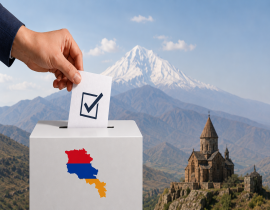
2 Scenario: the MEK is the New Regime
While anti-mullah opposition of Iran has a very strong diaspora, many intelligentsia and people in power in other countries, they are not unified nor made a parliament-in-exile style establishment, even though they had the chance for the last 50 years. Most of the proclaimed opposition group such as “Shah”, “green movement”, nor nationalistic groups like “Restart” are not organized bureaucratically and all of them claim they have real voice among Iranian people. Of course, all these groups have some kind of echo in the diaspora, but none of them still strong in the Iran proper. They do not have people power that are willing to sacrifice themselves or have a network of shadow government.
Pro-Shah people are seen a lot in the western media, but to be not forgotten, Iranian people made the Islamic revolution to get rid of Shah himself, and he is highly unpopular with the minorities (which is almost half of the population of Iran).
Almost all the prominent of the green-movement has been put into jail by the regime, and there have been strikes at their houses and jails since the start of 2026 conflict. They are also shaken and in a panic mode in Iran, because they were never expected an American strike, but the seize the government by semi-democratic means. Now, if they took the government after the assassination of Khamenei, they will be seen as traitors in the conservative circles of Iran and by the Bazaar.
Nationalistic front is not popular in both diaspora and in Iran, they were working with Shah, but in the last month there has been a divorce in their causes, as the Shah still not making prominent moves inside in Iran and is evidently acting like the proxy of western leaders, and most of the people like Mohammad Hosseini parted their ways with the Shah.
Iranian Transition Council (ITC), with the head of Hassan Shariatmadari, has some effect on Qom seminary trough his family ties, and they can also work with Najaf seminary as both his family and Najaf oppose the “Velayat-e Faqih”. But killing of Khamenei changed the balance between the schools of Najaf and Qom. Right now, Najaf school also gave a Jihad Fatwa (Sistani faction), and placed Khamenei into the ranks of martyred Marja. Right now Khamenei is in the spiritually, and in legacy, in the highest position of the Shia world. So, ITC may not be able to work with the Shia seminaries, as the seminaries cannot betray the cause of a martyred Marja.
Among most prominent opposition groups, the most organized ones in Iran proper seem to be like the MEK. They have a parliament-in-exile, shadow cabinet and support from old high ranking US politicians. Whether if they really use their democratic transition plans or become a continuation of undemocratic tradition of Iran are not known. Both are real possibilities in the event of hypothetical leadership of the MEK. It is not going to be argued if the MEK is the best government for Iranian people for now, nor they are really democratic in the Western means. The MEK was on the terror list of the US, for the last 20 years, they are not in terror list and are advertised by very-high level politicians. Their numbers are not many in Iran, and they are also unpopular by the old generation because of their history. But the difference between other opposition and the MEK is that, the MEK has armed militia, even thoguh low numbers, in Iran. And have clandestine members in the ranks of government. Therefore, they are the only opposition group who has money, and weapons in Iran. In this aspect, they have a high parallel with the Hayat Tahrir al-Sham (HTS).
The HTS with the leadership of current Syrian President al-Shara, was a terror organization that had ties with al-Qaeda and ISIS. After 2017, they obtained Idlib area, and established their government-in-semi-exile (some elements were in Idlib/Syria but most of them were are overseas). Their formed government was Syrian Salvation Government (SSG) which is highly similar to the National Council of Resistance of Iran (NCRI), the MEK’s government. On the top of that, the MEK had their government-in-exile formed almost 3 times more than the lifetime of SSG, hence they are waiting for their chance.
Of course, coming of the MEK is almost impossible for a lot of strategists. But it was the same for SSG and al-Shara. This kingmaking pipeline can be seen in the oriental world in different countries, such as coming of Taliban, Hamas, RENAMO in Mozambique, FLN in Algeria. Most importantly, it has high similarities as the clandestine socialist organization Khmer Rouge of Cambodia, which seized the power in the civil war, while no civilian knew their existence. Some parallel can be even seen in ETA of Spain and IRA of Ireland, and for some governments of the Latin America. For sure, they are not exactly in the current situation, but history shows us that not the most powerful, but, the most prepared can also gain power in a vacuum. Therefore, it will be speculated about such possibility, even it is in low chance.
In an event of the MEK coming power in Iran without a civil war, by the help of remnants of green movement and socialist minority groups, there could be a wave of new socialism in the Islamic world, and the dynamics of the middle east will shift immediately, for bigger struggles.
What this means for Türkiye and Middle East
If the MEK comes to power, they will, most probably, be seen as democratic until they get rid of the Mullah influence. After that, it will be shown that the MEK will change their course, in terms of governing, and will become more conservative. They may use oppressive force to the new opposition and minorities after seizing the full power in Iran. This tendencies may not matter to the West unless they possess a threat to Israel, which they will not. Nevertheless, they will possess much important threats to other countries in the Middle East.
Firstly, if the MEK seizes the power and solidify the governance in the Iran proper, the structure of the AoR will change, and they may go wild. A Hezbollah, Houthi movement and PMF without a big brother, are bound to clash and use every mean necessary to seize power in their own countries. In this aspect the conflicts in Lebanon, Iraq and Yemen will be escalated manyfold.
On the top of that, the ties of Palestinian Liberation Organization (PLO) and the MEK shares a deep history and coming of the MEK may ignite the socialist roots of the PLO again. This also means that clashes may occur between the West Bank and Gaza. The war that is ongoing between Hamas and Israel may be changed to Hamas vs PLO. If Israel helps PLO to take power over Gaza as well, they may have an end game over Gaza and can focus on Hezbollah solely. In short term, this will help Israel, and may finish the Sunni-Israeli conflict of the middle east. But in the long term, this can also affect the internal politics of Israel. Netanyahu government is becoming unpopular with each day because if the weight of the war, and if Netanyahu impeached the Israeli politics may go back to pre-Netanyahu “Labor Zionism” from the current “Liberal Zionism”. In that situation, the ties between Israel and the USA may be change in favor of the US, as Israel will be again started to be dependent on the US.
The other question would be, if the coming of the MEK may create a wave of new Arab spring, specifically in the gulf countries, where the Shia population is concentrated in the oil fields of the gulf. In a hypothetical scenario that the MEK forfeit Southern Azerbaijan, because to not enter a bigger conflict, to come to the Iranian government, the new Iran proper will be supermajority Persian. This means that the leading Shia majority countries; Azerbaijan, newly formed Southern Azerbaijan and new Iran, will be also ethno-Shia states. This may also give other Shia minorities on the gulf to make their own independent majority-Shia countries. If that happens, almost a quarter of the energy flow of the globe will be given to the independent Shia countries.
Coming of the MEK will also affect the Türkiye in two major scenarios. Türkiye may lose their good relationship with Israel (at least compared to the past-Hamas war), to the new Iran. As the influence on the PLO leadership must be lost to the MEK government. In that situation, Türkiye may also lose its leverage against the UAE-Israel-Cyprus-Greece energy line.
The MEK has therefore dialectical ties with Great Eastern Islamic Raiders Front (IBDA-C). The MEK have the opposite notion of self-emergent cause (Kendinden Zuhur) ideology, while the Mullah regime has kind of similarity to self-emergent cause philosophy. And the victory of the MEK will also make the Mullah regime elements to spread to Türkiye, and the experience of the Mullahs may give hope to achievements for these kinds of groups in the country. In such an event of the success of the MEK; It may be seen in Türkiye, IBDA-C and Raiders Organization (Akıncılar Derneği) could merge and their activities may emerge again. Thereupon, the MEK, in the end, is a socialist organization.
Trough the PLO, they may ignite a new conflict, by the terrorist organizations such as Kurdistan Workers’ Party (PKK) and Revolutionary People’s Liberation Party/Front (DHKP-C).
The MEK may also cause a wave of socialism in the Turkish and Azerbaijani politics. This could happen in two ways. First, it needs to be defined that there is a difference between the socialism in Türkiye and Azerbaijan. Turkish socialism has deep roots from ottoman era, but with the foundation of modern Türkiye and its Gladio policies from 70s, the socialism in Türkiye also started to be correlated with Kurdish cause. In modern Türkiye, socialism can be roughly equated to the Kurdish separatism. Therefore, most of the social causes which may, threaten a regime change in Turkish state, can be labeled as Kurdish separatism and are a leverage for the state. For Azerbaijan, which is a post-soviet country, socialism is kind of a taboo and can’t be directly used. But with the ideology of Shia-Marxism of the MEK, Azerbaijan may have some trouble. For Türkiye, the MEK seem to posses a threat where they may use the Kurdish separatism as a pressure tool, but it also needs to be not forgotten that, in the case of the MEK leadership in Iran, a Kurdish-Persian war is almost inevitable, hence the PKK and its umbrella organization Kurdistan Communities Union (KCK) will be an enemy of the MEK and this situation may change.
Furthermore, if the MEK comes to the power in Iran, the question of South Azerbaijan will also be raised. South Azerbaijan was ruled by the mullahs for the last 50 years, and they are more religious than Azerbaijan. To oppose the MEK, and socialist Shiism threat in Azerbaijan and in Shia Turkic populations, there is a move that the Türkiye and Azerbaijan may do together. If both countries work to accept Ja’fari school as the 5th school of law that has been accepted in Sunni Turkic countries, they can unite the Turkic people of middle east and Caucasus theologically, enabling the dream of Nadir Shah. Which would be a shield against the imposed religious actions of the MEK or the GCC countries on to South Azerbaijan. This movement will not be accepted for the non-Turkic part of the Muslim world (maybe except Syria, Pakistan and Indonesia) and will create a tension between Arabic and Turkic countries. Therefore, Arab countries and the GCC may use this as a religious casus belli in one or two decade, when all of the waterways of middle east come to the control of the united 5-madhhab countries.
But coming of the MEK, could also do good as it gives the Persian plateau and Baluchistan area, and it will prevent a hyper-chaos when the next mass migration from Indus Valley to Middle East happens. To help the MEK against this migration wave, the West may support them extensively, hence make them powerful. If this position happens, the MEK who has socialist root, and now an independent power, may become closer with China, and may cause a read wave in the Turkic and Arab world.
To get the best possible outcome, Türkiye may help South Azerbaijani independence before Israel, and enable Sunni-Ja’Fari school unity in the Turkic world, this way, the influence of the MEK on the Turkic world will diminish. On the top of that, if the MEK attacks Kurds of Iraq and Iran, Turkiye may use it as a pretext to save the Kurds, and may use it a case to save the Kurds, and after saving them, it can use the southern border of Syria and Iraq as a first-buffer area against Arabs for future water wars, and it may use Kurdish areas of Iran and Khuzestan to gain influence on the Gulf oil to prevent the monopoly of the Shia world and to create a second-buffer zone against the migration of Indus Valley.
3 Scenario: Civil War in Iran
One of the highly probable scenarios is a long civil war in Iran. If the conflict began to intensify and the burden on the economic flow of the world become increasing, other countries may also join to war to convert it to a civil war to contain it only in Iran proper as a land-based warfare and will try confine it in there. This will decrease the strain on the GCC, and the Persian Gulf may reopen again, but without Iranian oil flow. Therefore, it may exactly what the US planning as it is trying to decrease the energy flow to China to force it to drain their reserve energy, combined with Venezuelan and Russian flow.
If there will be a start of civil war, in the most realistic case it will start between Kurds and Balochs against Persians, in the first phase. Therefore, the war will just not be ethnic (besides Balochs) but also theological. Iran is a mosaic country culturally, and the Kurds of Iran divided between Shia and Sunni. Both extremely militant, and Sunni ones supported by the West as a lackey to ignite the civil war.
In this part, the structure or timeline of the civil war won’t be discussed as most of the formal introduction to the sides given in the previous sections. A possible civil war will be gone for years to come, it won’t be fast and it will also include other players like China and Russia, as they do not want to lose their influence on the area.
The important thing to discuss is the Turkic areas and influences on the Iran in the possible civil war. As discussed, the almost a third of Iran has Turkic heritage and south Azerbaijani people are also highly Turkish nationalist. In the event of a civil war, they may switch the sides from pro-Iran stance to pro-Turkic stance and may wait help from both Türkiye and Azerbaijan. Therefore, Turkic leaders of the current regime may change sides and move to Tabriz, such as Pezeshkian for the ranks of Southern Azerbaijan National Awakening Movement (GAMOH) and Azerbaijan National Resistance Organization (AMDT). Furthermore, it seems that foundation of this movement has been structured by the Turkic officials of Iran, by the function named “Fraction of Turkic Regions” of Iranian parliament, rooted in 2016. Turkic members of Iranian politics and bureaucracy have also Islamic hardliners, but it is possible that they can be in favor for pro-independence movements first then become opposition in the newly formed Turkic nations in Iran.
What this means for Türkiye and Middle East
In every case, the most important aspect of the civil war in the Iran would be South Azerbaijan movement for Türkiye and Azerbaijan. Türkiye, for its ambition of Turkic council and to be the main influence in the Turkic world, must help south Azerbaijan to be independent at the start of a civil war. There are right now 2 main sides that helps the South Azerbaijan movement, first is Israel, and very openly, secondly is Türkiye, but vey limited as the current foreign strategy is the unity of Iran. If the civil war starts, Türkiye needs to change its position immediately to not be seen as traitor to the Turkic political unity cause. As the continuous Iranian support will create opposition against Türkiye not just in South Azerbaijan bot also in Azerbaijan and Central Asia. Therefore, not supporting Turkic movements may backfire as the other Turkic countries may stop supporting Northern Cyprus policies of Türkiye.
It should not be forgotten that Israel will support Southern Azerbaijan independence no matter what, and if it supports it in civil war while Türkiye does not support, Israel may gain a big influence in Turkic world and be a bigger ally to Azerbaijan and newly formed Southern Azerbaijan. This could have dire effects in the future Turkish strategies as Israel supports southern Cyprus and Greece already for the new energy ways, and in the case of Israeli fore-fronted independence of Southern Azerbaijan, Israel may gain more influence in the Middle East as well.
Therefore, Azerbaijan maybe open new pipeline from Baku to Tabriz to Israel and it maybe connected to the designed energy ways between India-UAE-Cyprus-Greece. The importance of Baku-Tiflis-Ceyhan pipeline may decrease and a new energy way to Europe will open from Israel. This will decrease the influence of Türkiye in the notion of Energy of Europe and make Türkiye to lose leverage against Greek rivalry. On the top of that, if the new energy ways from Baku to Israel enters the Europe from Greece, the Greek economy will recover, and they will intensify military spending and rearm the islands in Aegean sea.
If Türkiye wont support southern Azerbaijan fast, it will have both economic and political consequences in the long term, such as losing energy leverage, decrease in Blue Homeland strategy and dissolution of the idea of Turkic unity. Furthermore, other countries may also support Kurdish independence, and this wave of independence may spray to Türkiye, if Southern Azerbaijan will not support Türkiye’s defense.
In the case of a civil war, being neutral or supporting territorial integrity of Iran, will be a wrong choice for Turkish strategy. Türkiye, in this scenario, must act maximalist for Southern Azerbaijan and need to capture Urmia before Kurdish coalition, and on the top of that, if the Turkish army can capture Sulduz before Kurdish groups, it can dominate the Southern Azerbaijani opinion in such a way that the opinion cannot be swayed in favor of any other establishment until the civil war ends.
- TAGS :
- Iran
- War
- Turkey
- Middle East
- TOPICS :
- Conflict and peace
- Energy
- Geopolitics
- Military
- REGIONS :
- Middle East and North Africa
About The Author

Ege Dogan
Ege Dogan is a PhD student and research assistant in the Department of Electrical and Computer Engineering at George Washington University. He holds a B.Sc. in Electrical and Electronics Engineering from Middle East Technical University and an M.Sc. in Telecommunications Engineering from the Technical University of Munich. Ege previously worked as a signal analyst and algorithm engineer for different defense companies.
png-1773130770.png)
jpg-1599133320.jpg)