Elmar Ismayilzada received his bachelor's and master's degrees in International Relations from Baku State University. Since 2022, he has been pursuing doctoral studies in International Relations at the Azerbaijan University of Tourism and Management. His research areas include peace and conflict studies, as well as the foreign policy of European states.
Politicon.co
International Actors and Peacebuilding in Bosnia and Herzegovina: From Liberal to Post-Liberal Approaches
Introduction
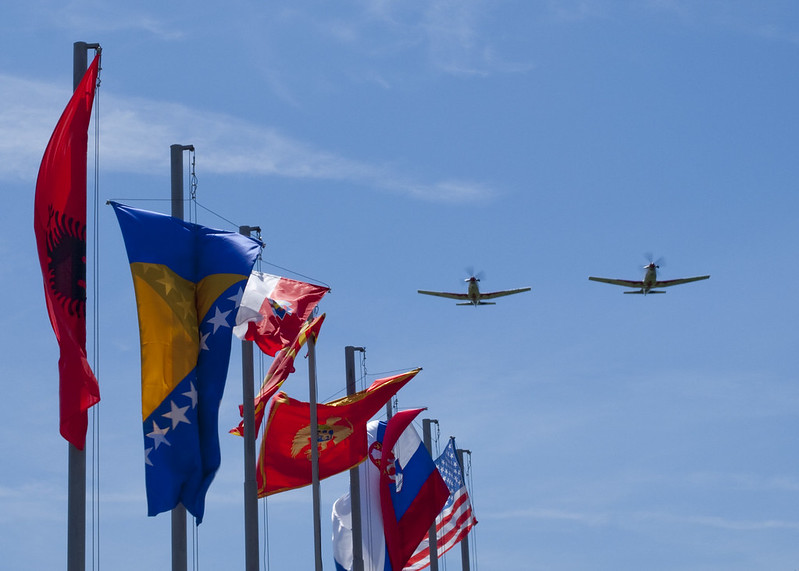
This article analyzes the limitations and contradictions of liberal peacebuilding in Bosnia and Herzegovina and argues that these shortcomings have increased the relevance of post-liberal peacebuilding approaches. Although liberal peacebuilding has shaped Bosnia’s post-war order since the Dayton Peace Agreement, its externally driven institutional design, weak local ownership, and persistent political fragmentation reveal structural problems within the liberal model. Bosnia and Herzegovina is therefore selected as a complex and unique case that clearly reflects the internal tensions of liberal peacebuilding.
The issue is significant for scholars and practitioners of international relations and peace and conflict studies, as Bosnia remains one of the longest-running and most intervention-intensive peacebuilding projects. Its mixed outcomes raise broader questions about the effectiveness and sustainability of liberal peace in deeply divided societies. The article is primarily addressed to academic researchers, graduate students, and policy analysts interested in peacebuilding theory and practice.
Existing literature presents competing views on peacebuilding. Liberal scholars emphasize democracy, rule of law, and market reforms as universal foundations of peace, while critical and post-liberal approaches highlight the technocratic, elitist, and context-insensitive nature of liberal peacebuilding. Post-liberal and hybrid perspectives argue for greater local agency, pragmatism, and adaptive governance rather than rigid normative templates.
This article contributes to the debate by linking peacebuilding approaches to the roles and strategies of concrete actors in Bosnia and Herzegovina. By evaluating liberal and post-liberal peacebuilding through an actor-centered framework, it fills a gap between theoretical critiques and empirical analysis. The article concludes that sustainable peace in Bosnia requires a post-liberal recalibration that integrates international involvement with contextual sensitivity and coordinated actor engagement.
Modern Peacebuilding Theories: The Liberal Model and Alternative Approaches
Traditional conflict resolution mechanisms proved insufficient to address the new types of conflicts that emerged after the 1990s; in this context, peacebuilding developed as an alternative approach. Boutros Boutros-Ghali defines peacebuilding as the strengthening of structures that prevent the recurrence of conflict, while Roland Paris conceptualizes it as a mechanism for transferring Western values to developing countries and promoting the liberal state model. He emphasizes that this model may have a destabilizing effect.
Since peacebuilding largely emerged within Western academic circles, the liberal peace approach came to the forefront, with democracy and civil society regarded as the foundations of the security architecture. However, the application of this model has been criticized for frequently disregarding social realities, creating institutional frameworks aligned with donor interests, and producing unsustainable outcomes. Liberal peacebuilding has also been questioned for being ethnocentric, elitist, technocratic, superficial, and unresponsive to local expectations. Its grounding in Western values has led to clashes with local cultural and political contexts and, in some cases, to perceptions of neocolonial intervention. David Lake characterizes liberal peacebuilding as an expression of the “excessive self-confidence” of the 1990s and highlights the necessity of pragmatic approaches tailored to local realities. Against the backdrop of these critiques, UN documents have increasingly emphasized approaches based on sustainable development and local legitimacy, giving rise to alternative models.
Among these alternatives to liberal peacebuilding, non-intervention, adaptive transitional initiatives, and hybrid peace models have gained prominence. Although hybrid peacebuilding is based on the integration of international and local mechanisms, it has been criticized due to the risk of elite capture and insufficient contextual knowledge. Positive hybrid peace seeks long-term stability by reconciling local traditions with universal values, whereas negative hybrid peace strengthens elite interests through the fusion of liberal institutions with authoritarian and patriarchal structures. Michael Zürn explains this process in four stages, ranging from international coercion to the emergence of local alternatives.
At the same time, peacebuilding faces challenges related to sovereignty concerns, the risk of hegemonic intervention, and systemic constraints. These challenges directly affect key components such as the scale and duration of missions, the level of local participation, and institutional compatibility.
In the contemporary period, the essence of peacebuilding has shifted away from the standardized approaches of the liberal model toward forms that take local context, historical experience, and cultural specificity into account. Consequently, the success of peacebuilding is ensured when international resources are reconciled with local adaptation and normative approaches are aligned with contextual realities, transforming peacebuilding into a dynamic and adaptive concept within the global governance system. However, transformations in the international system will continue to generate changes in peacebuilding theory and practice, and the ability of the international community to respond to these challenges will determine the future trajectory of peacebuilding.
Classification of Actor-Based Approaches to Peacebuilding in Bosnia and Herzegovina
If the peacebuilding approaches and practices discussed above are applied to the actors exerting influence in Bosnia and Herzegovina, several distinct groups emerge. The conflict in Bosnia and Herzegovina is subject to the influence of major and regional powers such as the United States, Russia, the European Union, China, the United Kingdom, Hungary, Turkey, and Serbia. These powers can be grouped according to whether they demonstrate liberal or post-liberal approaches to the issue. However, given that post-liberal actors differ significantly in terms of power, interests, and influence, it is more appropriate to further divide them into two subgroups. Among these actors, one of the forces contributing to heightened tensions around Bosnia is considered to be the Bosnian Serb factor. The so-called “Dodik effect,” regarded as one of the factors influencing both the foreign and domestic policy of Bosnia and Herzegovina, continues to exert influence despite efforts to weaken it. At the same time, actors with differing values, positions, and levels of power affect the ongoing processes in Bosnia and Herzegovina. For this reason, it is necessary to address the contradictory issues faced by Bosnia, which is situated at a geopolitically and geostrategically contested crossroads.
Positions of Liberal Peacebuilding Actors on Bosnia
Western states with liberal democratic systems advocate the establishment and development of institutions in Bosnia and Herzegovina based on values such as democracy and the rule of law. They perceive the growing influence of illiberal regimes and the instability within the existing system as threats to their own values. It should be noted that, because these states employ a normative approach, failure to comply with established requirements or deviations from these norms often trigger sanction mechanisms. At the same time, these measures are implemented due to the risk of peacebuilding being exploited by local elites. Currently, countries in this category play a greater role in maintaining the existing system in Bosnia and Herzegovina and in the development of its political, economic, and other sectors.
For Western states, one of the main issues is the growing criticism directed at the Office of the High Representative (OHR). At present, these criticisms increasingly frame liberal peacebuilding in Bosnia as having a “neocolonial” character . This, in turn, indicates that liberal peacebuilding has drifted away from pragmatism.
Within this category, the United States acts as the sole superpower. The United States, regarded as the leader of the Western bloc, began to engage actively in post-conflict reconstruction processes in Bosnia and Herzegovina following the signing of the Dayton Agreement. However, after the events of September 11, 2001, the nation-building dimension of U.S. policy toward Bosnia weakened.
Moreover, the restriction of USAID activities in Bosnia points to the deprioritization of “democracy promotion” issues in U.S. policy. In current U.S. policy toward Bosnia and Herzegovina, economic factors have come to the forefront, and Euro-Atlantic integration may lose its priority. This creates a risk of strengthening the positions of external actors such as Russia, Turkey, Hungary, Serbia, and China.
Personality-based politics in Republika Srpska has led to closer relations with the United States. At the same time, the new U.S. security strategy suggests support for maintaining the political status quo in Republika Srpska. The removal of Milorad Dodik who considered one of the most influential political figures in Republika Srpska from the U.S. sanctions list indicates that the United States is interested in ensuring stability in Bosnia and Herzegovina.
Recent developments allow for certain conclusions regarding the nature of relations among states and their respective positions. Bosnia and Herzegovina adopted a position closer to that of the United States regarding U.S. military intervention in Venezuela, reaffirming strategic partnership ties. This demonstrates that Bosnia continues to attach importance to its relationship with the United States. At the same time, Bosnia and Herzegovina’s failure to issue an official position regarding membership in the U.S.-initiated “The Board of Peace” organization reflects the complexities of its political system. In my view, Bosnia’s aspirations for integration into the European Union hinder the adoption of a clear stance in this context. Consequently, Bosnia seeks to maintain a balance by taking into account policy divergences among Western countries.
The European Union is considered the principal peacebuilding actor in Bosnia and Herzegovina. This actor tends to adopt a predominantly normative approach, which may further elevate the regulatory function within a more pragmatic framework. The EU’s role and activities in peacebuilding in Bosnia and Herzegovina have been systematically shaped since the late 1990s. In the post-conflict period, the EU has implemented numerous initiatives aimed at restoring stability and promoting integration processes in the region. The European Union is still regarded as a leader in regional peace initiatives.
The Russia–Ukraine war has generated renewed calls for Bosnia and Herzegovina’s accession to the European Union. This influence may either accelerate or hinder the process, depending on the strategies pursued by the two actors toward each other. EUFOR seeks to expand the scale of its mission in order to achieve sustainable peacebuilding outcomes. The EU’s efforts to enhance local participation in peacebuilding constitute another contributing factor to the process. One of the obstacles to the effective implementation of EU peacebuilding, however, is a lack of contextual knowledge.
The United Kingdom is considered one of the states adopting a more assertive stance on the issue of recognizing and commemorating the Srebrenica genocide. The UK’s attention to developments in Bosnia and Herzegovina has increased, largely due to the perceived risk of growing Russian influence against the backdrop of the Russia-Ukraine war.
Among these countries, the United States possesses the greatest resource capacity; however, its attention priorities have shifted. Although its liberal-normative activities and motivations have weakened, it remains interested in preserving the existing system. This suggests that the United States has recently tended toward a non-interventionist approach to peacebuilding. In my view, by devoting greater attention to regulating relations between Serbia and Kosovo, the United States could minimize Serbia’s destabilizing influence in Bosnia and Herzegovina. In this context, the burden of applying normative measures increasingly falls on the European Union, with the UK potentially supporting the EU in this regard.
The continued failure to fully meet the conditions for closing the Office of the High Representative further intensifies criticism of these actors. One advantage of the European Union over other liberal actors is that it has begun to prioritize post-liberal approaches and seeks to assume a regulatory role. Unlike the United States, the EU places greater emphasis on adaptive transitional initiatives and hybrid peacebuilding. Nevertheless, the EU must work to minimize the negative aspects of these approaches. In my view, as the primary normative peacebuilding actor, the European Union must pursue coordinated action with other local and international actors in Bosnia to ensure effective peacebuilding. This is because post-liberal peacebuilding is a phased process that requires a long time horizon and sustained attention.
Post-Liberal Great Powers and Their Impact on the Dayton Order
Countries such as China and Russia can be included in the category of Post-Liberal Great Powers. In the context of the decline of the liberal order, these rising powers have increasingly undertaken counter-actions against Western states on the Bosnia issue among non-Western and illiberal countries. Their status as permanent members of the UN Security Council further expands their capacity to influence developments in Bosnia and Herzegovina. Russia has even issued skeptical statements regarding the implementation of the Dayton system, which indicates tendencies of resistance to liberal peacebuilding.
Nevertheless, both states are interested in ensuring stability in Bosnia and Herzegovina. For this reason, they supported the extension of the European Union’s Operation Althea, despite statements by Republika Srpska calling for the withdrawal of EU forces from Bosnia.
Russia is considered one of the states with historical, cultural, political, and economic ties to Bosnia and Herzegovina. Russia’s strategy on the Bosnia issue creates conditions that weaken the influence of the central government and reduce prospects for integration into Euro-Atlantic structures. There are claims that Russia has begun using Republika Srpska as an operational hub against Western states. In this regard, Russia’s policy demonstrates a selective approach to peace in Bosnia. It should be noted that the former political leader of Republika Srpska, Milorad Dodik, continues to maintain ties with Russia.
China is a relatively new actor in the processes unfolding in Bosnia and Herzegovina and seeks to maintain and strengthen its position primarily through economic instruments. China’s economic influence in Republika Srpska has been expanding. However, Bosniak and Croat communities approach this influence more cautiously, sometimes perceiving China’s policy as a potential obstacle to integration with Western institutions. China’s position, however, is not as rigid as Russia’s, although it may still pose a risk to liberal peacebuilding.
The growing influence of Russia and China intensifies competition with liberal actors engaged in peacebuilding in Bosnia and Herzegovina. Although these countries often invoke the principles of non-interference in domestic affairs and sovereign equality in their foreign policies, this stance itself contributes to the emergence of contradictions. At the same time, the future of the Dayton system established with the participation of the international community comes under threat. Conversely, this influence can also be viewed as an “external critique mechanism” and a “protector of local actors’ rights” in peacebuilding in Bosnia and Herzegovina, though it remains open to political manipulation.
In my view, Russia and China should cooperate with Western countries to enhance international coordination in peacebuilding. Otherwise, the potential for conflict escalation may increase. Nevertheless, it remains unlikely that the great powers will allow a large-scale war to occur in Bosnia and Herzegovina; rather, they tend to limit their actions to exerting constrained pressure on the foundations of liberal peacebuilding.
Post-Liberal Regional Actors in Bosnia: Pragmatism and Regional Interests
The category of Post-Liberal Regional Actors includes countries such as Serbia, Hungary, and Türkiye. These states have historical, cultural, and related ties with Bosnia and Herzegovina and, during periods when they pursued imperial policies, exercised significant influence over Bosnia’s fate. At present, however, their capacities in terms of power and influence are more limited compared to actors in other categories. They share close political and economic values with Bosnia, which makes an examination of their positions particularly relevant.
Unlike the other countries in this category, Serbia has closer cultural affinities and geographical proximity to Bosnia. Nevertheless, several factors intensify contradictions in bilateral relations. Bosnia’s decision not to join the Open Balkan initiative led by Serbia indicates a lack of trust toward Belgrade. Within Serbia’s Bosnia and Herzegovina policy, the issue of Srebrenica remains one of the most contentious points. Serbia’s growing militarization and nationalist rhetoric also affect security risks in Bosnia and Herzegovina. Although Serbia seeks to preserve its relations with the West, it periodically supports Republika Srpska in Bosnia’s political disputes, thereby facilitating the expansion of Russian influence.
In recent years, Hungary’s Bosnia policy has been criticized by Western states and by Bosnia’s central government. In this regard, Hungary can be seen as moving closer to the positions of Russia and China on the Bosnia issue. Value alignment and the geopolitical context in the the particularly Russia–Ukraine war play an important role in this shift. Hungary’s open support for Republika Srpska in the face of pressure from the European Union demonstrates tendencies that challenge liberal peacebuilding. However, such actions remain limited in scope and are subject to external pressure and constraints.
Türkiye and Bosnia and Herzegovina are closely connected through historical, political, cultural, and other factors. Within the framework of regional cooperation, Türkiye has undertaken several diplomatic initiatives, one of whose key aspects is integration into Euro-Atlantic institutions. Nevertheless, these initiatives have been less effective than those of the European Union. Türkiye’s Platform for Peace in the Balkans (BPP) initiative, aimed at contributing to sustainable peace in Bosnia and Herzegovina, reflects this approach. Within this initiative, Türkiye also seeks to emphasize its national interests in the tourism sector. In this way, Türkiye attempts to strengthen its position in the region through various instruments while continuing a line that ultimately reinforces Western policies.
With the exception of Serbia, the actors listed in this category do not pose a serious threat to the positions of Western states; Serbia, by contrast, represents a potential challenge. Nevertheless, Western states and several local actors harbor certain concerns regarding these actors. At the same time, these countries possess potential capacities to contribute to peacebuilding. Therefore, in my view, peacebuilding efforts in Bosnia would be more effective if conducted in a coordinated manner together with other actors.
Overall, the policy practices of these states reflect elements of both Western and Eastern civilizations. Given that Bosnia itself is not monolithic, the participation of all the aforementioned actors in peacebuilding processes may prove more effective. Moreover, involving states with diverse resources would prevent the burden of peacebuilding from being concentrated on a limited number of actors, thereby enhancing coordination. Both internal dynamics within Bosnia and contemporary geopolitical realities make the effective implementation of post-liberal peacebuilding in Bosnia necessary. The current system in Bosnia exhibits clear deficiencies, and unless these shortcomings are addressed, the system will not develop; conflicts within and beyond the system will persist, and unresolved issues may lead to escalation. For this reason, the international community should initiate more coordinated action regarding the directions of post-liberal peacebuilding in Bosnia and Herzegovina.
Conclusion
This article has examined the limitations of liberal peacebuilding in Bosnia and Herzegovina and explained why these challenges have increased the importance of post-liberal approaches. Bosnia was analyzed as a complex and unique model in which liberal peacebuilding has ensured stability while simultaneously reproducing political and institutional contradictions.
By adopting an actor-centered perspective, the article has shown that peacebuilding outcomes cannot be understood solely through normative models but must be assessed in relation to the interests and interactions of international, regional, and local actors. This analysis supports post-liberal arguments emphasizing adaptation, pragmatism, and local legitimacy.
In conclusion, the article finds that sustainable peace in Bosnia and Herzegovina depends on moving beyond a purely liberal framework toward a post-liberal approach that balances international norms with contextual realities. Future research may apply this actor-based framework to other post-conflict cases or further refine post-liberal peacebuilding models.
- TAGS :
- TOPICS :
- Conflict and peace
- Security
About The Author

Elmar Ismayilzada

png-1773130770.png)
jpg-1599133320.jpg)