
Politicon.co
Elite Construction or Historical Reality? Nationalism and Clanism in Somalia
When examining the applicability of various theories of nationalism across different cases, one frequently encounters theoretical debates about whether nations and nationalism are constructed top-down or bottom-up. According to Anthony Smith, a prominent ethnosymbolist theorist in the field of nationalism studies, these discussions about the nature, origins, and developmental dynamics of nations and nationalism occupy a central place in the historiography of nationalism (Smith, 2000). As Smith emphasizes, a nation emerges in its most basic form from the intersection of shared conditions within a given society, including territory, historical memory and common myths, public culture, economic life, common laws, and legal obligations (Smith, 1991). The failure to meet one or several of these minimal conditions sometimes leads to the complete collapse of nation-building projects. Debates about the mechanisms of nation-building are therefore relevant not only to understanding how nations form, but also to understanding their deconstruction and the failures of nation-building projects.
One of the central theoretical paradoxes that emerges in this context is that the literature explaining the failure of nation-building sometimes attributes the process either to elite politics and the strategies of political leaders in mobilizing nationalism, or to the internal sociology and in some cases the "organic nature" of the ethno-linguistic group claiming nationhood. Research subjects thus frequently find themselves caught between two poles: is it the historical-sociological structure of the clan or ethnic group that determines nation-building, or is it the instrumental politics of a political elite that exploits that structure? This tension surfaces with particular sharpness in the case of Somalia. This paper attempts to uncover how a third path might be formulated, using Somalia as its primary case.
Somalia is frequently presented as one of the foremost examples of both a failed state and a failed nation-building project, owing to its colonial legacy, a brief period of socialist modernization, the collapse of the central government, a prolonged civil war, separatist regions, warlord dominance, and extremist jihadism (Ingiriis, 2018). Despite its high degree of ethno-linguistic and religious homogeneity, clan-based social segmentation in Somalia runs so deep that the actual existence of what is traditionally called a "nation" as a collective phenomenon is called into question. Clan identity, sectarian and religious affiliation, and territorial loyalties all complicate the analysis of Somalia in academic literature, both theoretically and methodologically.
The primary aim of this paper is to analyze, through the lens of various theories of nationalism, both the formation of the Somali national project as a top-down nation-building program carried out by the political elite, and the subsequent collapse of nationalist discourse as a result of clanism, civil war, and social fragmentation. In particular, the paper seeks to answer the following research questions: what accounts for clan-based division and the failure of nation-building in Somalia, the historical nature of the clans or the misguided policies of the elites? And what third theoretical path, moving beyond this dichotomy, might explain the process? To this end, the paper comparatively examines the colonial legacy and post-colonial state-building, the political and intellectual development of pan-Somali ideology, the specificities of clan structure in Somalia, and the explanatory power of nationalism theories within this framework.
Pre-Colonial Order and Colonialism in Somalia
Although the pre-colonial political order of Somali society is often described as a "stateless society," both classical anthropological literature and more recent research indicate that clan-state formations with distinct governance structures did exist (Lewis, 1961; Ingiriis, 2016). The well-known segmentary lineage model of anthropologist and Somali scholar I. M. Lewis illustrates how socio-political organization in Somalia was built around genealogy. Society is divided into six major clan groupings, which in turn fragment into sub-clans, lineage groups, and at the lowest level smaller units known as diya/mag payment groups. This structure is organized around two large genealogical blocs, the pastoral nomadic Samale (Darod, Dir, Hawiye, Isaaq) and the more agrarian Sab (Digil, Mirifle). What bound these groups together was not blood alone, but also a contractual customary law known as Xeer. Xeer governed collective defense, security, compensation, and the rules of resource use, producing what Lewis described as a "pastoral democracy" that operated above clan institutions themselves (Lewis, 1999).
In this sense, pre-colonial Somalia was neither chaotic nor the kind of complete "stateless" void that Eurocentric twentieth-century scholarship tended to claim. Field observations and medieval traveler accounts describe Somali territories as clan-partitioned zones, something akin to clan republics. Various clans maintained their own territories, port towns, and forms of local authority, though none of these resembled a centralized Westphalian nation-state. Mogadishu, for instance, was composed of two distinct sultanates prior to colonial occupation, while centers such as Zeila and Geledi existed as political units grounded in specific clan structures. Alongside genealogy, space (grazing lands, water sources, rural and urban neighborhoods), religious orders, and trade routes all played significant roles in social organization. In the agrarian-pastoral models of the southern regions in particular, territorial belonging sometimes took precedence over clan genealogy (Lewis, 1999).
From the late nineteenth century onward, the entry of European empires into the region profoundly transformed this pre-colonial order. The Somali coastal territories were gradually partitioned into five separate colonial units: British Somaliland, Italian Somalia, French Somali Coast (later Djibouti), the eastern Ogaden territories of Ethiopia, and the Northern Frontier District of Kenya (Schrader, 2006). In drawing these borders, neither the migratory logic of pastoral life nor the historical boundaries of clan zones were taken into account, and as a result the lands of many clan families were divided across the jurisdictions of different states. Because colonial administrations failed to understand local social realities, they read clan genealogy as fixed "tribal" categories and converted it into a technology of governance. In the north, the British granted clan elders the status of "chief," thereby creating hierarchies that had not previously existed. In the south, the Italians constructed a social classification system that sorted clans by racial category. Applying the racial theories prevalent in Europe at the time to Somali society, the Italian administration classified the pastoral Samale clans as "governing and superior," while the Digil-Rahanweyn and particularly the Bantu ethnic groups were categorized as "inferior races." This classification led to the dispossession of Bantu communities, their conscription into forced labor on plantation economies, and the sharp hierarchicalization of society as a whole (Fellin, 2013). Under this system, a flexible, contractual, and multi-layered clan order gradually became politicized within the structures of colonial administration along rigid lines of division, and was transformed into the historical foundation upon which the post-colonial clan states that would later emerge were built.
Post-Colonial Nation-Building, Pan-Somalism, and Its Collapse
Post-colonial nation-building projects characteristically begin with the formation of an elite during the colonial period, and the models for how a national state ought to be constructed take shape during that same era. In colonial Somalia, the modern elite emerged primarily through a transformation driven by education. Because both the Italian and British administrations sought to produce "sufficiently literate personnel" within a short period and with limited resources, they drew mainly the sons of clan elders, urban merchant families, and groups that had come into early contact with colonial authority into secular schools. These institutions served a dual purpose: they trained low-level clerks and technical workers, while also producing a new generation of elites loyal to the colonial administration and socialized into Western values (Abdullahi, 2015). In parallel, Islamist intellectuals who received Arab-Islamic educations and later studied in Egypt, Syria, Iraq, and the Gulf also began to emerge, giving the elite structure a bifurcated form divided between a Western-oriented secular wing and an Arab-Islamic educated one. This division, running along lines of language and curriculum, later generated lasting tensions within the state between Westernized elites and those formed by Arab-Islamic education.
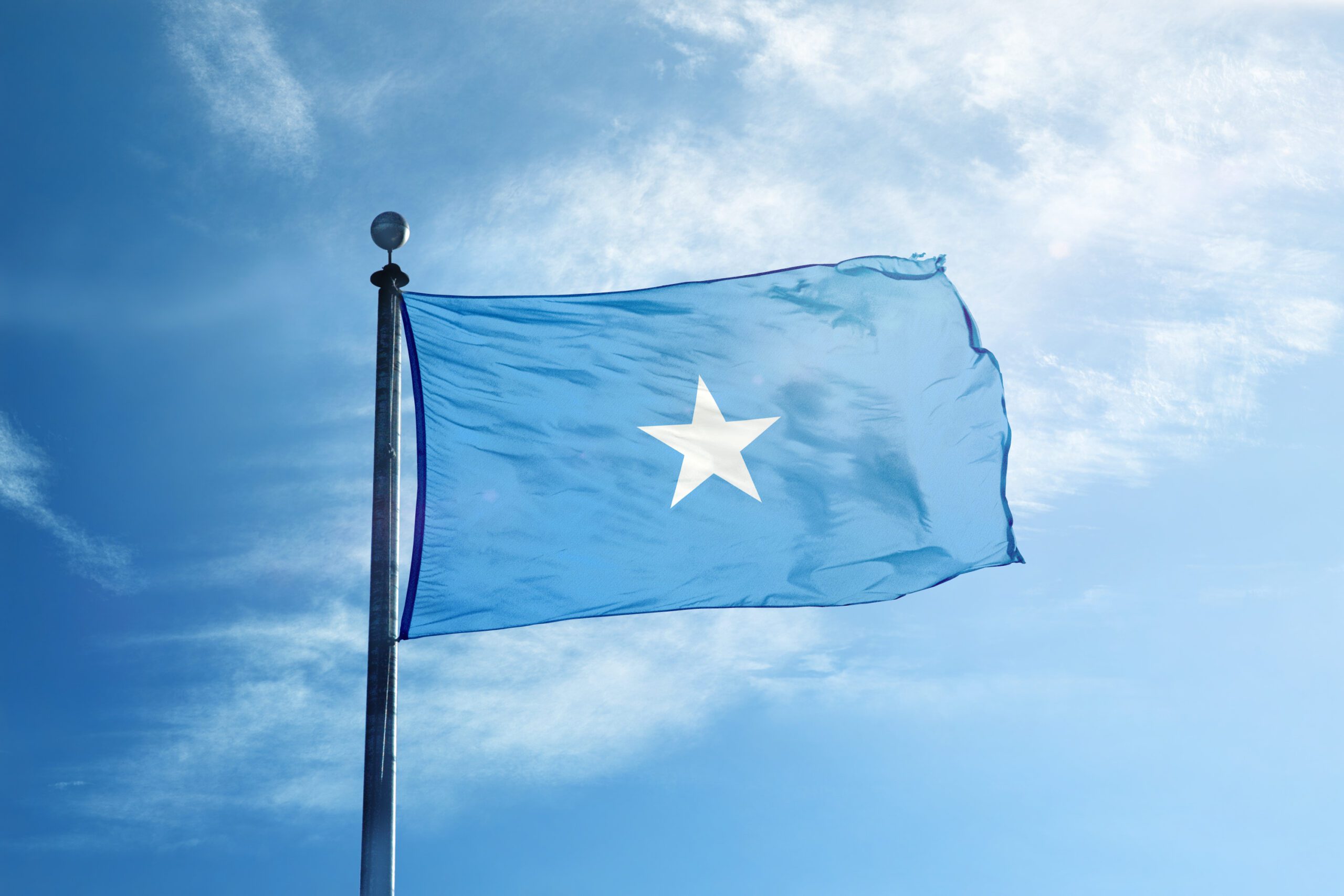
In the period leading up to independence and through the first decade after it, the pan-Somali national project took shape largely on the initiative of this newly educated elite. The Somali Youth League (SYL), the Somali National League (SNL), and other parties united around the idea of "Greater Somalia," setting as their goal the unification of all Somali-inhabited territories under a single state, including those administered by Djibouti, Kenya, Ethiopia, Britain, and Italy, as represented by the five-pointed star on the Somali flag. But this was never a mass nationalism rising from below, transcending clan divisions. It remained, above all, a project of urban elites. After British Somaliland and Italian Somalia merged and Somalia became independent in 1960, the first parliamentary period (1960-69) saw the establishment of a constitution, a unified administrative system, and a diplomatic policy on one hand, while on the other the government assembled cabinets according to clan quotas to maintain inter-clan balance, and parliamentary elections became increasingly contests along clan lines. The emergence of more than sixty parties, most of them organized along clan lines, by 1969 demonstrated that the elite had failed to hegemonize the national ideology in a manner durable enough to transcend clan loyalties (Schrader, 2006).
Siad Barre's military coup of 1969 presented itself as a correction of precisely this failed nation-building. Under the banner of scientific socialism, Barre declared his intention to eradicate clanism at its roots, banning clan names, launching anti-clanism campaigns, and proclaiming that class and nation would replace the clan in official ideology. The transition of the Somali language to the Latin script and literacy campaigns made genuine contributions to national state-building in the early period. In practice, however, actual policy was accompanied by the consolidation of a narrow clan coalition centered on the "MOD" axis (the Marehan, Ogaden, and Dulbahante clans), with security apparatus and resources channeled toward this network (Schrader, 2006). Barre brought bureaucrats from his own Marehan clan to power and created conditions for political and social authority to concentrate in their hands. The Ogaden War of 1977-78, fought against Ethiopia to seize the Ogaden region inhabited by ethnic Somalis, became the breaking point of both pan-Somali irredentism and the regime's legitimacy. The defeat suffered against a Soviet-Cuban intervention generated widespread disillusionment and deepened mutual recriminations and clan polarization among the elites.
It was in this context that the post-colonial elite's full return to clan-based politics took place. After 1978, the Majeerteen, and later the Isaaq and Hawiye elites, mobilized their clans within armed opposition organizations. The Barre regime carried out regionally and clan-targeted violence, directed especially against the Isaaq clan in the north. The massacre and bombardment carried out by regime forces in Hargeisa, today the capital of Somaliland, in 1988 is sometimes referred to as the "Hargeisa Holocaust." By the time Barre was overthrown in 1991, clan and region had already become the primary political framework for elites. For this reason, Barre's fall only deepened the divisions and clan segmentation further. The United Somali Congress's unilateral claim to power in Mogadishu prolonged the civil war, led northern elites to regard the 1960 elite compact as entirely bankrupt, and ultimately resulted in the Somali National Movement declaring Somaliland's unilateral independence. From that point on, the Somali national project had de facto collapsed, ceding its place to clan-based statecraft and fragmented elite politics. Shortly after, in 1998, Puntland in the northwest declared its own autonomy, deepening the fragmentation further (Menkhaus, 2003).
By the twenty-first century, Somalia's political map had become a mosaic of clan-based regional entities. In the northwest, Somaliland presents itself as an independent republic, treating the borders of former British Somaliland as the basis of its political legitimacy. In the northeast, Puntland remains in ongoing border disputes with Somaliland over the status of the Sool and Sanaag regions. In the southwest, Jubaland has taken shape as an autonomous entity and has extended its sphere of influence into border areas with Kenya. In the central zone, Galmudug has been established, and further to the north-center, Hirshabelle, both maintaining claims to regional-level governance primarily along the Shabelle valley. Around the capital, the idea of a separate Benadir state has gained increasing momentum in recent years, reflecting the position of urban elites seeking to establish a distinct political unit around Mogadishu (Ingiriis, 2018). Despite the 2004 Nairobi conference, the 2008 Djibouti process, and the 2012 federal constitution, Somalia today remains far from building a genuinely unified and functional state. Although the purpose of federal construction was to create political balance, it has instead provided conditions for regional authorities to consolidate their own zones. It was precisely this political vacuum that allowed the jihadist organization Al-Shabaab to grow stronger. By offering a more centralized governance model that transcended clan loyalties, it was able to provide in the south the kind of administration the state could not. The political reality shaping the region, in the end, is the deepening of clan-based statecraft and the permanent weakness of the center.
How Do Theories of Ethnic Nationalism Analyze Somalia?
There are numerous directions in the theoretical literature for explaining the clanism and the failure of nation-building in Somalia, though primordialism has historically been the dominant framework, particularly throughout the previous century. Contemporary analysts have sought in recent scholarship to dismantle this framework, which offers a remarkably poor account of conflict and fragmentation, primarily through the analytical lens of instrumentalism and alliance theory. Western anthropologists and colonial administrations, as noted above, with the British incorporating clan elders into fixed hierarchies in the north and the Italians classifying clans by racial category in the south, read Somali society through a primordialist lens, treating clans as natural and immutable communities. This view was later reproduced by Somali elites and international actors alike, turning clanism into a fixed starting point in social analysis. On the other hand, the political crises Somalia experienced both during the democratic period and in the post-Siad Barre era demonstrated that clan identity is frequently mobilized in an instrumentalist fashion by elites and converted into a tool of politics. It must be noted, however, that instrumentalism is not fully explanatory of Somali reality, as taking this approach as a primary framework risks overlooking the alliances formed at the local level and the other factors that may underlie the durability of clans. It is for this reason that testing alliance theory in the remainder of this paper, that is, the approach that sees conflict as the product of mutual alliances among local and central actors rather than elite manipulation alone, may prove useful in understanding the clan dynamics of Somalia. The fact that the Somali clan system operates simultaneously at the genealogical, political, and local power balance levels makes this approach essential as an analytical starting point.
The approach that explains the clan structure of Somali society as a stable, immutable, and blood-based "primordial" system long constituted the dominant strand in Western anthropology. I. M. Lewis, the most influential representative of this framework, described clans particularly in his early work as patrilineal structures grounded in agnatic blood ties, presenting all political mobilization as behavior derived from this "natural" genealogy (Lewis, 1961). This account is problematic both empirically and analytically. First, Lewis's 1961 analysis relied on the classificatory schemes produced by colonial administration, and by fitting Somali social reality into those schemes, it overlooked variability (Kapteijns & Farah, 2001). Second, this framework, which takes the stability of clan institutions as its premise, cannot account for the possibility that genealogies change, that the diya/mag groups within clan structures are contractual in nature, or that contextual identities form (Kapteijns, 2004). The fact that even the diya/mag groups, considered the most static element of Somali society, are grounded not in blood kinship but in situational contracts makes this contradiction plain. Although originally formed for the purpose of paying blood money when individuals from different clans killed one another, this clan organization, with its broader functionality, could emerge sometimes from a single lineage, sometimes from an entire clan family, and sometimes from regional alliances with no blood basis at all, depending on the scale of compensation to be paid and the possibilities for solidarity (Gaas, 2019).
Another point that undermines primordialist arguments is that clans have periodically been able to alter their own genealogies in response to circumstances. The system known as "Abtiris," which has existed throughout Somali history, involves the oral recitation of a clan family's lineage going back twenty generations and serves as a means of legitimizing blood ties. Even major clans attempt to create religious legitimacy by tracing their lineage back to the Quraysh tribe through this genealogical line. Sub-clans, however, can frequently change their Abtiris and attach themselves to another clan. Clan genealogical memory is therefore selective and can sometimes become an "invented myth" (Schrader, 2006). The movement of some Somali groups along border regions into Oromo or Borana genealogies is a concrete illustration of this elasticity. Similarly, the fact that the Wardey group in the Jubba region was initially affiliated with the Ogaden genealogy and later shifted to the Hawiye clan family for political purposes also demonstrates that genealogy can be altered in accordance with political and ecological conditions (Kapteijns, 2004).
All of this suggests that the clan is not a product of deep biological memory. The central characteristic of the clan system is its elasticity, its capacity to change according to context, and its formation as a strategy for accessing resources. Deterministic readings that treat clanism as a fixed and unchanging factor are therefore insufficient for explaining Somali reality, given that clans have never been static and continue to change to this day.
Within the instrumentalist framework, which represents another major direction in attempts to explain clan-based division in Somalia, scholars such as Kapteijns and Samatar view clan identity not as a stable social reality but as a variable category that political elites manipulate in order to acquire resources, maintain power, or weaken rivals. This perspective carries some explanatory power when examined against Somali history. The institutional entrenchment of divide-and-rule policies during the colonial period, as well as the mobilization of clans by parties and military elites under suitable conditions after independence, clearly illustrates the manipulative character of clan politics in Somalia (Kapteijns, 2004; Samatar, 2000). For instance, the vast majority of parliamentary parties during the 1960-69 period were organized around specific clan groups, and political coalitions were accompanied in particular by the Abgaal-Majeerteen rivalry (Samatar, 2000). Barre's construction of the MOD coalition during his rule, as noted above, further confirms how the clan was actively used as a political resource. The "warlordism era" after 1991 displays this dynamic with even greater sharpness. After the fall of the Barre regime, the leaders of armed groups such as the United Somali Congress, the Somali National Movement, and the Somali Democratic Salvation Front converted clan loyalty into political capital and seized control of cities, ports, and customs checkpoints. The division of Mogadishu into two parts by General Aideed and Ali Mahdi factions relying on their respective clan militias, the complex web of relations constructed between movements, and the fighting all make plain the function of the clan as a manipulated political resource.
Instrumentalism, however, does not fully account for Somali reality. For one thing, it portrays manipulation as a one-way process, as though elites shape the clan while the masses passively accept this (Gaas, 2019). In the Somali context, however, clan groups also "manipulate elites in return." Support is given only when mutual benefit and resources are provided, and when they are not, military and political elites can find themselves sidelined even by their own clans. It is precisely at this point that alliance theory opens up a productive "third path" for Somalia. This approach does not explain conflict and alliance formation solely at the elite level but also takes into account the everyday security needs of local groups, resource circulation, and the shifting coalitions that arise as a result (Demmers, 2017). In the Somali context, it is more appropriate to view the clan's current role not as a fixed structure but as a system of tactical coalitions dictated by conditions of conflict. Barre's loss of support from the Ogaden clan after signing an agreement with Ethiopia in 1985 recognizing the Ogaden as Ethiopian territory, and the successive abandonment of warlords by their own militias during the war, are clear illustrations of this (Schrader, 2006). The splintering of the United Somali Congress into the Aideed and Ali Mahdi factions between 1992 and 1994 is explained by the fact that militiamen abandoned their leaders when expected loot and salaries failed to materialize. The same occurred when Abdullahi Yusuf temporarily lost the support of Majeerteen factions in Puntland (Compagnon, 1998). This dynamic undermines the top-down model assumed by instrumentalism and shows that clan politics is built on mutual dependencies. The simultaneous fighting between Habar Gidir and Abgaal groups in 1991-92 and the alliance of Abgaal with certain Habar Gidir factions to control the Xamar Weyne market, or the joining of some SPM factions with the USC to fight against other Digil-Mirifle groups (Compagnon, 1998), are classic examples of the tactical coalitions that alliance theory explains.
An important consequence of this dynamic is the phenomenon analyzed by Menkhaus (2006): despite state collapse, governance does not disappear entirely but continues in informal form through clan elders, business groups, and local structures. Menkhaus calls this process "governance without government" and shows that local coalitions, including clan elders, merchant groups, and sharia courts, take on the minimal public order functions that the state is unable to perform (Menkhaus, 2006). This perspective complements alliance theory. Clan coalitions form not only for conflict but also for system-building and filling governance vacuums, and this is a point that both instrumentalist and primordialist frameworks overlook.
On another front, the instrumentalist framework cannot account for the structural dynamics of the clan. Processes such as the alteration of genealogies, the political invention of new lineages, and the formation of new diya/mag groups arise not from manipulation alone but also from bottom-up initiatives related to clans' search for resources and security (Gaas, 2019).
Conclusion
The theoretical and empirical material presented in this paper demonstrates that the clan conflicts continuing in Somalia today cannot be explained by the "historical and immutable nature" of its society. The roots of ongoing conflict in Somalia lie not in ancient enmities between clans but in the interplay of contemporary political, economic, and security dynamics. That said, the influence of primordialism has not entirely disappeared from current perspectives. In failed state approaches in particular, Somalia is still sometimes portrayed as a society organically ill-suited to the demands of modern state-building. The country's existing federal model is better understood as a form of agonistic pluralism, a political arrangement built on tension that accommodates the parallel existence of various political and regional clan entities.
It can be said that political elites played a determining role in the failure of nation-building in Somalia, both in the emergence and entrenchment of clan favoritism and in the construction of a national identity that overreached what existing conditions could sustain. A framework based solely on elite motivations, however, tends to read the persistence of violence as top-down manipulation, and in doing so oversimplifies local relations. What is required instead is an account that takes seriously the intersection of interests among actors at multiple levels, security needs, and other complex factors. This perspective reveals that the Somali political environment is shaped by mutual dependencies rather than unidirectional control.
In the final analysis, the failure of nation-building in Somalia can be explained neither by a purely top-down nor a purely bottom-up account. The process has unfolded under the influence of both macro-level political projects and locally formed alliances, and continues to this day according to the same logic.
Literature:
- Abdullahi, A. M. (Baadiyow). (2015). Reconfiguration of the Somali society: The impact of Sufi orders and colonialism.
- Compagnon, D. (1998). “Somali armed movements.” African Guerrillas
- Demmers, J. (2017). Theories of violent conflict: An introduction (2nd ed.). Routledge.
- Fellin, M. (2013). The historical impact of Western colonial and imperial policies and interventions on conflict and internal displacement in Somalia.
- Gaas, M. H. (2019). Primordialism vs. instrumentalism in Somali society: Is an alternative needed? Journal of Contemporary African Studies, 36(1), 1–20.
- Ingiriis, M. H. (2018). From pre-colonial past to the post-colonial present: The contemporary clan-based configurations of statebuilding in Somalia. African Studies Review, 61(2), 55–77.
- Kapteijns, L. (2004). I. M. Lewis and Somali clanship: A critique. Northeast African Studies, 11(1), 1–23.
- Kapteijns, L., & Farah, M. (2001). I. M. Lewis, A pastoral democracy: A study of pastoralism and politics among the Northern Somali of the Horn of Africa. Africa, 71(4), 719–723.
- Lewis, I. M. (1961). A pastoral democracy. Oxford University Press.
- Menkhaus, K. (2003). State collapse in Somalia. International Security.
- Menkhaus, K. (2006/2007). Governance without government in Somalia: Spoilers, state building, and the politics of coping. International Security, 31(3), 74–106.
- Samatar, A. I. (2000). The Somali catastrophe: Explanation and implications. In Ethnicity kills? (pp. 37–67). Palgrave Macmillan.
- Schrader, P. (2006). From irredentism to secession: The decline of pan-Somali nationalism. University of Michigan Press.
- Smith, A. D. (1991). National identity. Penguin.
- Smith, A. D. (2000). The nation in history: Historiographical debates about ethnicity and nationalism. Polity Press.
- TAGS :
About The Author
Bayram Bayramov
Bayram Bayramov holds a Bachelor’s degree from the Faculty of History at Baku State University and a Master’s degree from the Institute of History of the Azerbaijan National Academy of Sciences (ANAS). He is also a graduate of the Certificate Program in Mediation and Conflict Resolution at the University of San Diego. His research interests include the role of historiography in national identity construction, nationalism studies, as well as conflict and peace studies. Bayram has also been an organizer and participant in various peacebuilding initiatives and projects.

png-1773130770.png)
jpg-1599133320.jpg)