Politicon.co
The Critical Role of Azerbaijan and Türkiye in Iran’s Political Transition
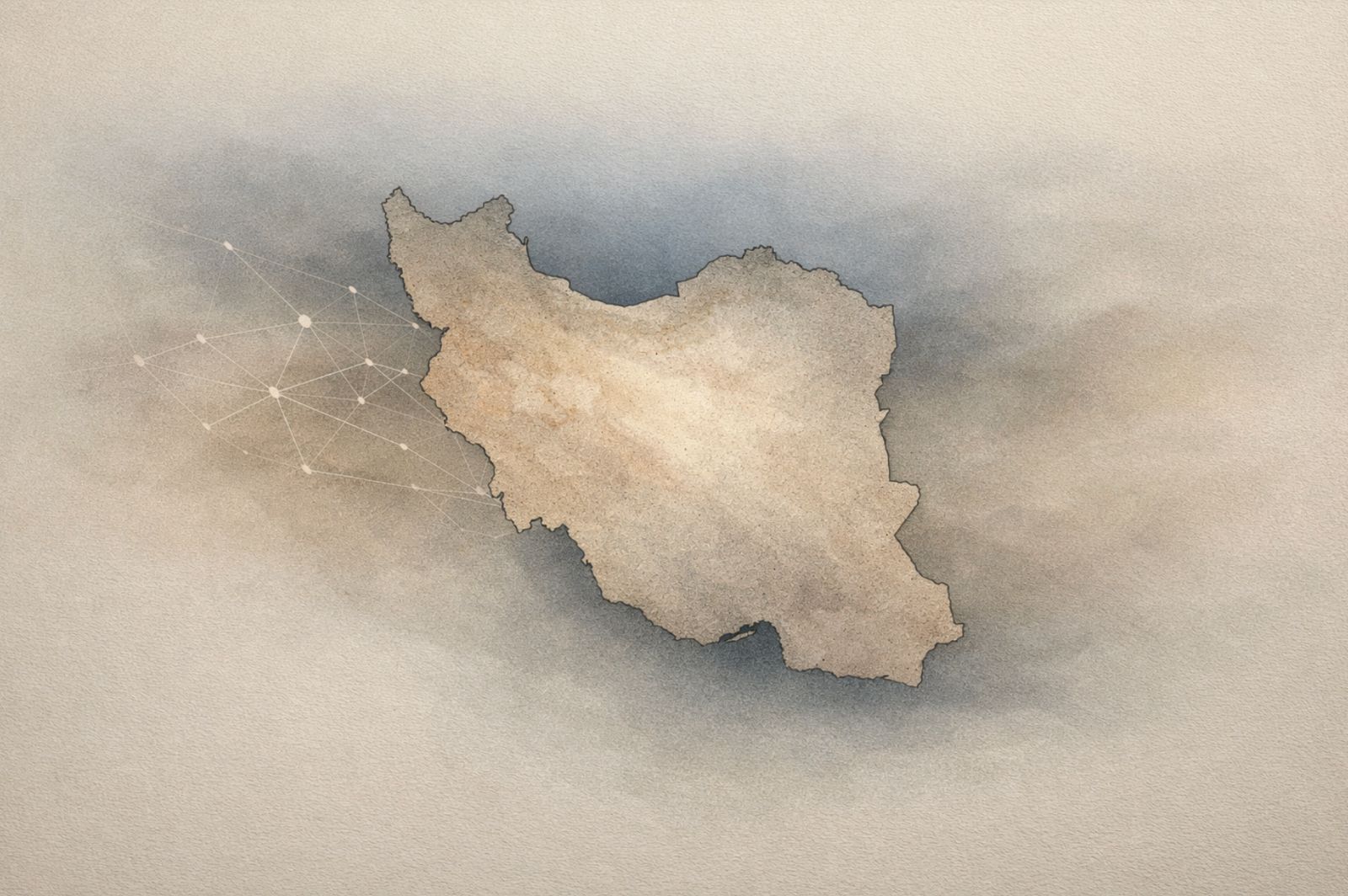
As protests spread across Iran, much of the international commentary has focused on the United States and Israel. But any serious assessment of a potential political transition should also account for Iran’s immediate neighborhood, specifically Türkiye and Azerbaijan. Bordering states shape the incentives and pressure points available to both governments and oppositions. If Iran enters a period of prolonged unrest or negotiated transition, Ankara and Baku will be among the outside actors with the most direct ability to influence outcomes.
In any transition scenario, the more relevant question is often not who prefers the status quo, it is who has the capacity and willingness to sustain it. Russia and China are frequently described as Tehran’s strategic partners, yet both relationships appear bounded. Moscow can offer diplomatic backing and selective security cooperation, but analysts doubt it would commit forces to defend Iran’s leadership directly, especially with its military and political bandwidth absorbed by the war in Ukraine. Beijing, for its part, has substantial economic interests in Iran, but its approach has typically emphasized flexibility rather than security guarantees. This partnership is better understood as transactional than alliance-like, with clear limits.
That reality elevates Iran’s immediate neighbors, specifically Türkiye and the Republic of Azerbaijan because proximity creates leverage of a different kind. Both countries would be primarily concerned with containing spillovers: border stability, refugee flows, trade disruption, and the risk of cross-border militancy. At the same time, they would have strong incentives to position themselves for a workable relationship with whatever political order follows.
Protests
The current protest cycle began in late December 2025 after the rial hit new lows, triggering strikes and demonstrations among shopkeepers in Tehran’s Grand Bazaar before spreading to other cities. Early reporting framed the unrest as an economic revolt rooted in currency collapse and daily price shocks. Yet the political geography of protest matters. Some structurally marginalized regions including parts of Iran’s Kurdish and Azerbaijani-populated provinces, remained hesitant to join. This divergence is not difficult to explain. Where unemployment is chronic and basic living standards have eroded for years, calls anchored primarily in market stability and commercial predictability can feel distant from the more immediate struggle to secure food and housing. In that sense, class and regional inequality can fragment protest coalitions before they ever consolidate.
Another factor shaping participation is the symbolic politics of the opposition itself. The reappearance of the Pahlavi name in transition debates has proven polarizing, particularly among many South Azerbaijani and Kurdish people who associate the monarchy’s nation-building project with forced cultural assimilation and political repression. The collective memory of national and ethnic minorities shape their political mobilization. When opposition narratives revive unresolved grievances and ignore cultural and political demands rather than acknowledge and integrate them, coalition-building becomes harder.
Still, as the unrest widened, demonstrations increasingly took on a national character. Following calls from the South Azerbaijani and Kurdish groups in the diaspora, these groups also joined the demonstrations, turning them into a nationwide rebellion. Iranian authorities have responded with arrests and periodic communications blackouts to an extent unseen before which include internet disruptions intended to slow mobilization and restrict information flows.
Washington and Jerusalem
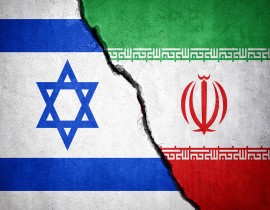
Since 1979, the Islamic Republic has anchored part of its legitimacy in opposition to the United States and Israel politically, rhetorically, and through regional partnerships. Official messaging has long framed Washington as a hostile power, infamously labelling them the “Great Satan”, while Iran has rejected Israel’s legitimacy and treated confrontation with it as a defining feature of the Republic’s revolutionary identity.
That posture sharpened after the 12-day conflict in June 2025, when Israel struck Iranian targets and eliminated high ranking officials. The United States later joined with attacks on Iranian nuclear facilities. The episode exposed vulnerabilities and hardened threat perceptions on all sides, leaving Tehran more sensitive to signs of external pressure and leaving Washington and Israel more willing to signal that escalation remains on the table.
These dynamics have also shaped the politics of Iran’s opposition. Reza Pahlavi, the exiled son of Iran’s last shah, has sought to present himself as a transitional figure and has encouraged demonstrators from abroad. However, his level of support inside Iran is difficult to measure given that his calls for protests during the 12-day war were left unanswered. His profile remains polarizing especially given historical grievances associated with the monarchy.
In Washington, President Donald Trump has publicly urged Iranians to continue protesting and said he has canceled meetings with Iranian officials until violence against demonstrators stops, while declining to specify what “help” would entail and leaving open the possibility of military action. Iranian officials, for their part, have accused the United States and Israel of fueling unrest. This is an argument the state has used repeatedly to frame dissent as foreign driven rather than domestically rooted.
The administration’s rhetoric has also been interpreted through the lens of its recent operation in Venezuela that captured Nicolás Maduro, an event that has fueled speculation about whether Washington sees “swift” coercive options as transferable to other adversaries. But analogies can mislead. Iran’s strategic depth, security architecture, and regional entanglements make any outside attempt to “manage” a political transition far less predictable than confident slogans imply. This is where Türkiye and Azerbaijan enter the picture.
Ankara and Baku
Türkiye and Azerbaijan have both an ideological and a logistical influence on Iran. Iran’s largest national minority are the South Azerbaijanis who are primarily ethnically Turkic. Their population is estimated to range from 15 to over 30 million which makes them roughly a quarter to a third of the Iranian population. The precise numbers are uncertain because Iran does not publish official data on ethnicity. Their mother tongue is Azerbaijani and can easily communicate in Turkish as well, creating a kinship with both countries.
In the early nineteenth century, the treaties of Gulistan (1813) and Turkmenchay (1828) redrew the frontier between Qajar Iran and imperial Russia, separating many Azerbaijani communities north and south of the Aras River. Despite sharing a common history, language, and cultural heritage, Azerbaijanis north and south of the border experienced markedly different political trajectories as a result of shifting geopolitical forces. The Azerbaijani Republic achieved independence from the Soviet Union in 1991 and established a sovereign state. In contrast, Iranian Azerbaijan briefly formed its own autonomous government in 1945 under the leadership of Jaʿfar Pishevari, only to see it violently dismantled by the centralized Pahlavi state, a brutal suppression that resulted in thousands of deaths.
This shared historical experience has contributed to a lasting sense of collective identity. In Iran, longstanding constraints on cultural and linguistic expression such as restrictions on education in the Azerbaijani language, have sustained demands for greater recognition and autonomy among South Azerbaijanis. These aspirations are often expressed during public demonstrations through the slogan “Azadlıq, Ədalət, Milli Hökumət” (“Freedom, Justice, National Government”).
The spillover risk is not theoretical. For instance, during the 2020 Karabakh war, protests were reported in several cities in support of Azerbaijan, including demonstrations calling on Tehran to close the border with Armenia. When Iran maintained relations with Armenia and allowed the transit of supplies through its territory, some South Azerbaijani activists organized protests aimed at disrupting these movements. Iranian officials dismissed claims that Iran was materially assisting Armenia as “baseless rumors,” while reports at the time described detentions and sporadic confrontations between protesters and security forces.
Tehran’s relationship with Baku has oscillated between pragmatic engagement and deep mistrust, shaped by competing regional alignments and periodic crises, most visibly the 2023 attack on Azerbaijan’s embassy in Tehran and the diplomatic fallout that followed. Azerbaijan closed the mission after the shooting and later reopened it in July 2024, a step widely read as a cautious attempt by both sides to steady relations without resolving the deeper sources of friction. Yet geography forces ongoing engagement, and both sides have periodically signaled interest in stabilizing ties when tensions threaten to spill into the borderlands.
Some analysts argue that President Masoud Pezeshkian, an Iranian politician from Tabriz with Azerbaijani and Kurdish roots may be better positioned than his predecessor to pursue a limited thaw with Baku, and Iranian officials have indicated that strengthening ties with Azerbaijan was among his early directives. Read in a wider regional context, this outreach can also be seen as part of Tehran’s effort to reinforce neighborhood diplomacy after setbacks to the network often described as the “Axis of Resistance,” including the ouster of Bashar al-Assad in Syria and significant losses sustained by Hamas and Hezbollah in recent conflicts.
Türkiye’s interests in Iran do intersect with identity, given the cultural and linguistic affinities that link Ankara to Iran’s Turkic-speaking communities. But Ankara’s sharper identity driven concern is security, specifically, the Kurdish question. Iran’s western borderlands are home to diverse Kurdish communities, and a number of armed Kurdish groups have operated in and around the Iran–Iraq border, including PJAK, which U.S. authorities have described as tied to the PKK’s broader network.
For Ankara, the PKK remains a central national-security preoccupation, one it has pursued for decades inside Türkiye and through cross-border operations in neighboring states. In a transition scenario, Turkish officials would likely worry less about symbolic “Turkic solidarity” than about whether instability creates new corridors, safe havens, or momentum for armed groups in the borderlands, an anxiety shaped by Türkiye’s experience in Iraq and Syria. By contrast, Azerbaijani activism inside Iran has largely taken the form of cultural-rights mobilization and street protest rather than organized insurgency, precisely why Ankara’s primary fear in a volatile moment is not Turkic unrest, but a security vacuum that empowers armed actors.
In Syria, Türkiye crossed the border to pursue a set of security and domestic-policy objectives Ankara has repeatedly articulated: pushing threats away from its frontier. These are both ISIS and the Kurdish-led YPG, which Türkiye views as linked to the PKK, and creating a “safe zone” that could also support the return or at least the containment of large refugee populations on Turkish soil. Those aims help explain why Türkiye has sustained a long-term military footprint in northern Syria and continues to warn of further action when it believes Kurdish forces are consolidating near the border.
A similar logic could shape Ankara’s posture toward Iran in a destabilizing transition. A large-scale incursion would be far costlier and less plausible against a stronger, sovereign state, but Türkiye could still move quickly to “harden” the frontier by stepping up surveillance and cross-border counterterrorism coordination, especially if armed Kurdish groups operating in the Iran–Iraq borderland appears to gain space or momentum amid disorder.
Migration is a central concern for both countries and not in abstract humanitarian terms alone, but as a question of capacity and economic strain. If a political transition in Iran devolves into prolonged internal conflict or becomes a new arena for proxy competition, Türkiye and Azerbaijan would likely face immediate pressure at their borders as people flee violence and uncertainty. Yet neither government has unlimited room to absorb large new inflows. Türkiye already hosts one of the world’s largest refugee populations, and public fatigue over immigration has become a major domestic political issue. Additional arrivals from Iran would intensify pressures on housing, labor markets, and social services. Azerbaijan, while smaller and less exposed, would still confront constraints in employment, public services, and border management. In both cases, the prospect of large-scale displacement would not only test social cohesion but also risk disrupting trade corridors and investment confidence. Therefore, migration management is a core driver of how Ankara and Baku respond to any destabilizing turn in Iran.
Türkiye and Azerbaijan have invested heavily in the Baku–Tbilisi–Kars (BTK) railway and in the broader overland and sea logistics network often called the “Middle Corridor”. This is the Trans-Caspian route linking Central Asia to the South Caucasus and onward to Türkiye and Europe. For both governments, this is a strategic hedge against the Northern Corridor that runs through Russia. Since Russia’s full-scale invasion of Ukraine and the sanctions and commercial risk that followed, overland freight through the northern route has become more politically and operationally complicated. This has driven renewed attention to the Middle Corridor and exposed the value of transit states that can move goods without passing through Russia. In that sense, Ankara and Baku are positioning themselves as critical connectors between Central Asia, the South Caucasus, and European markets, with trade volumes along the corridor rising from a low base as shippers diversify routes.
Energy infrastructure reinforces the same logic. The Southern Gas Corridor with
the Trans Anatolian Natural Gas Pipeline Project “TANAP” as its central segment and the Trans Adriatic Pipeline “TAP” as its European endpoint, already carries Azerbaijani gas through Türkiye toward European buyers. The EU has publicly framed this route as part of its diversification away from Russian supply. That is why instability next door would not be a distant geopolitical story for Ankara and Baku. A turbulent transition in Iran would make them early “first responders” by default. Both Ankara and Baku must manage border pressures and commercial disruption while protecting the transport and energy arteries they increasingly rely on for strategic relevance and economic resilience.
Conclusion
Türkiye and Azerbaijan will not “decide” Iran’s future, but their proximity gives them an outsized ability to shape what a transition looks like in practice through borders, trade routes, security coordination, and regional legitimacy. For Washington, that means any attempt to influence outcomes in Iran would run up against the realities of neighborhood politics. Ankara has already warned publicly against foreign intervention in Iran, arguing it would deepen instability, a posture that could constrain U.S. options even where interests overlap. And while Türkiye’s ties with Israel have deteriorated sharply by restrictions on trade and limits on Israeli government flights, Baku’s relationship with Israel remains notably close, anchored in energy and defense cooperation.
At the same time, Azerbaijan’s growing diplomatic visibility in Washington has been reinforced by the U.S. brokered Armenia–Azerbaijan agreement announced and signed at the White House in August 2025. This is an initiative that includes a major transit-corridor component and remains the subject of ongoing implementation debates. That agreement depicts a broader point in which U.S. policy in this neighborhood increasingly intersects with Türkiye and Azerbaijan’s connectivity ambitions and security red lines. In a volatile Iran scenario, Washington is therefore unlikely to pursue a course that seriously alienates either capital. This is not because Ankara and Baku control events in Iran, but because their cooperation will be essential to managing spillover, maintaining regional transport and energy routes, and preventing a transition from becoming a wider regional crisis.
- TAGS :
- Iran
- Azerbaijan
- Turkey
- TOPICS :
- Foreign policy
- REGIONS :
- Middle East and North Africa
About The Author
Turkan Bozkurt
Turkan Bozkurt is a paralegal, dedicated human rights advocate, and writer with extensive expertise in Middle Eastern affairs, gender equality, and minority rights. She holds a Master of Arts in Near & Middle Eastern Studies from the University of Toronto and a Bachelor’s degree in Criminology and Sociolegal Studies, equipping her with a deep understanding of legal systems, social justice, and the intersections of law and society.
With a strong background in human rights reporting, Turkan has worked with organizations such as ARC, AzCivic Nation, Etekyazi, and the Foundation for Inclusive Society, contributing to reports on human rights violations and policy analysis. Her work has been featured in leading think tanks and news outlets, including Geopolitical Monitor, Eureporter, and JNS. Additionally, she has been a prominent panelist at international conferences such as the Economic Forum Poland, MESA, and NWSA.
Turkan’s advocacy extends to global human rights initiatives, including her participation in the United Nations Commission on the Status of Women. She is particularly focused on comparative analysis, drawing connections between systemic oppression in Iran and North America. Through her research, she examines parallels in gender discrimination, minority rights suppression, and state violence, highlighting how different political and legal frameworks impact marginalized communities. Through her work, Turkan continues to amplify marginalized voices, challenge systemic inequalities, and contribute to policy discussions on gender and minority rights.

png-1773130770.png)
jpg-1599133320.jpg)