Politicon.co
The newly proposed annual Kingdom Conference: what does it mean?
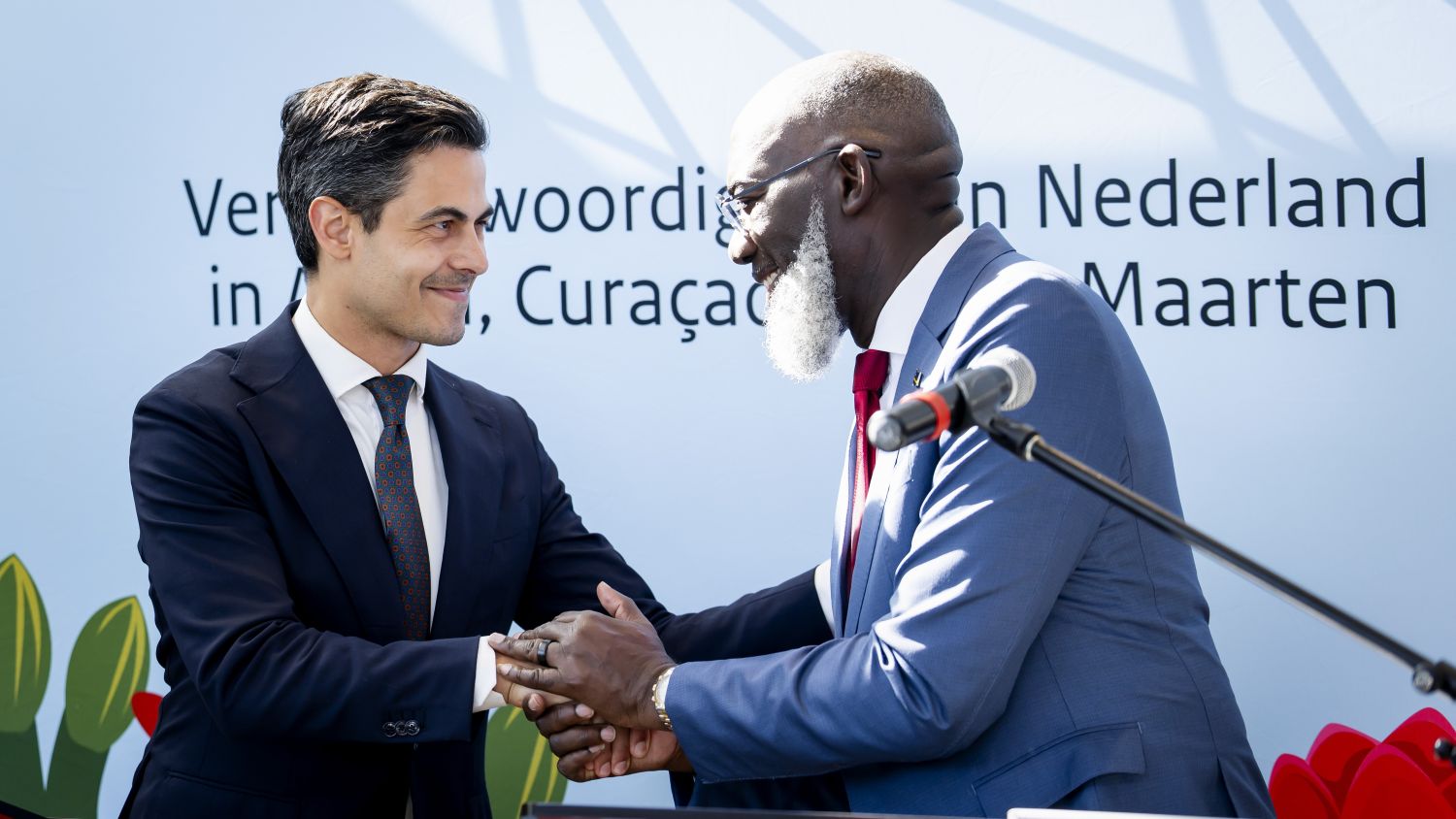
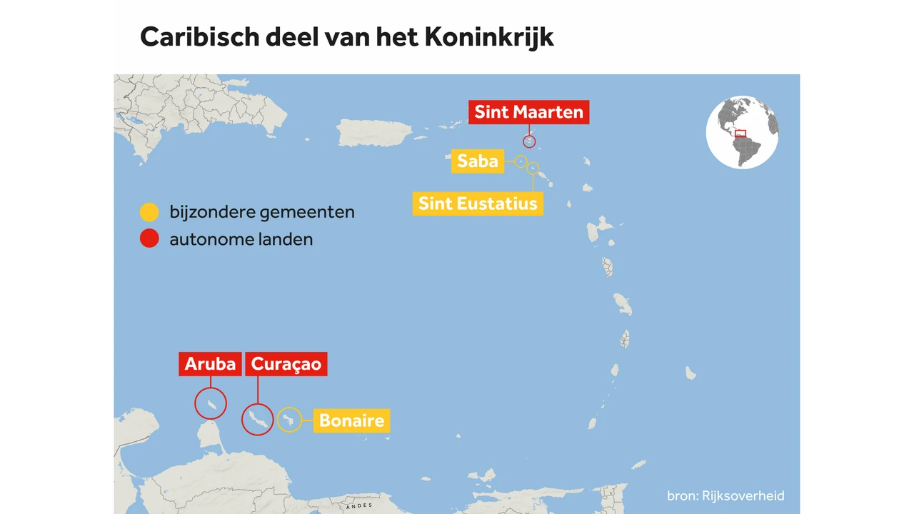
From the 8th of May until the 14th of May, Dutch prime minister Rob Jetten had a working visit to the Caribbean part of the Kingdom of the Netherlands. This part consists of the islands of Saba, St. Eustatius, St. Maarten, Aruba, Curaçao and Bonaire. All these islands are part of the Kingdom of the Netherlands. During his visit, Jetten announced that he is planning to organise an annual Kingdom Conference between the Netherlands and the other countries within the kingdom. But why is he proposing such a conference now and what does the Kingdom of the Netherlands exactly mean?
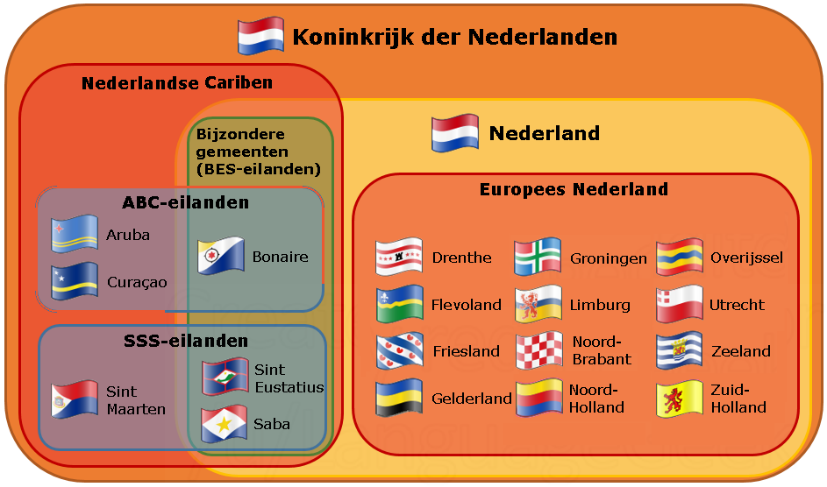
The Kingdom of the Netherlands consists of four countries; the Netherlands, St. Maarten, Aruba and Curaçao. Each of these countries have their own government, parliament and laws for domestic affairs. For example, all these countries can decide on their own on issues like education, healthcare, taxes, etc. However, some areas, like foreign policy, defence, nationality and protection of fundamental rights and legal certainty, are being arranged by the entire Kingdom as its own entity. This also means that Aruba does not have its own ambassies scattered around the world and that someone from Curaçao has Dutch citizenship and a Dutch passport instead of citizenship from Curaçao. All of this is described in Het Statuut voor het Koninkrijk der Nederlanden (the Statute for the Kingdom of the Netherlands), which was signed in 1954. However, at the time it was made for the Netherlands, Suriname and the Netherlands Antilles as one country. In 1975 Suriname got its independence and thus left the Kingdom of the Netherlands. In 1986 Aruba left the Netherlands Antilles and became its own country within the Kingdom of the Netherlands. Finally, in 2010, Curaçao and St. Maarten received the same status as Aruba as countries within the Kingdom. With these reforms, the Netherlands Antilles stopped ceasing to exist.
King Willem-Alexander is the king of the whole Kingdom of the Netherlands, therefore, he is thus also king of the Caribbean parts of the kingdom. Nonetheless, since he is residing in the Netherlands, the other countries within the kingdom all have a governor, who represent the king.
The situation gets more complex as the Netherlands also has three Caribbean islands that do not function as their own country but are a part of the Netherlands. They are known as so-called ‘special municipalities of the Netherlands’. These islands are Bonaire, St. Eustatius and Saba, also known as the BES-islands. These islands are part of the Netherlands, but not of the EU. Nevertheless, since inhabitants of these islands have Dutch citizenship, they do enjoy the benefits of an EU-citizen. Most of Dutch law also applies for the islands, however, since life on these islands is very different and more expensive than in the European Netherlands, some laws differ, e.g. on taxes and minimum wage. Inhabitants of these islands also vote for national Dutch elections.
After Rob Jetten has only been prime minister for 3 months, he decided to visit all of the Caribbean islands in the Kingdom of the Netherlands. This has been very well received in the Dutch Caribbean, as the relationship between the Netherlands and the Caribbean islands has been rather brittle the last couple of years. There is quite some poverty on the islands, including in the special municipalities, and the islands feel inferior to the Netherlands, especially after the last Dutch government formed by the PVV of Geert Wilders.
Another issue that damaged the relationship was an UN-resolution from last March. Ghana submitted a resolution that officially labels the transatlantic slave trade as "the gravest crime against humanity" ever. The Netherlands decided to abstain from voting, because they do not want to form a hierarchy between atrocities. However, later it was discovered that the Netherlands never discussed to abstain from voting with the Dutch Caribbean islands, whom do not have an UN-seat since they are part of the Kingdom of the Netherlands and are thus not fully independent. To make matters worse, the islands were very badly affected by the transatlantic slave trade. Curaçao for example was a hub for slave trading and was the most important slave market in the region during the slave trade. This made it extra painful that the Netherlands did not discuss its voting plan with the Caribbean islands before.
During his visit, Jetten has apologised for not discussing this matter beforehand. The Netherlands is also the only European country that has apologised for its role in the slave trade in 2022 by the then prime minister Mark Rutte and in 2023 by king Willem-Alexander. During his visit, Jetten stated: ‘We have rightly apologized for the role in the history of slavery and its impact on the present, but it must not stop at apologies. We must keep working together and helping each other.’
Because of shared past history and the big differences between the Netherlands and the other countries within the Kingdom, Jetten has announced during his trip that he wants to organise an annual Kingdom Conference between the Netherlands, Aruba, Curaçao and St. Maarten. During this conference, the four countries will discuss matters as equals. The conference will also be organised as a way to improve ties between the countries. The goal is not only to talk with each other, but to make a concrete agenda with firm and lasting agreements.
An official date and location of the conference is not known yet, however, Jetten has implied that the first conference will already take place this year. St. Maarten has offered to host the conference in November or December 2026.
The proposed Conference can be seen as an attempt to redefine relations within the Kingdom of the Netherlands. While the Kingdom is built on shared citizenship, institutions and history, relations between the European Netherlands and the Caribbean countries has recently been rather stiff, mainly because of inequality and the feeling of an existing hierarchy. Recent controversies, such as the UN vote on the transatlantic slave trade, have once again exposed tensions within the Kingdom and raised questions about how equal the four countries truly are in practice. By creating this conference for dialogue between equals, Prime Minister Rob Jetten hopes to strengthen trust and cooperation across the Kingdom. Whether the conference will lead to lasting change remains to be seen, but hopefully it will represent an important note towards a more balanced and equal relationship between all parts of the Kingdom of the Netherlands.
- TAGS :
- Avropa
- Netherlands
- REGIONS :
- North America and Carribean
- Western Europe
About The Author
Maurits Rodenberg
Intern Maurits Rodenberg is a research intern at Topchubashov Center from the Netherlands and a fourth-year student of International Relations and International Organization at the University of Groningen. He also spent six months in Georgia as an exchange student. His academic and research interests focus on the politics of the Southern Caucasus and International Political Economy.
png-1773130770.png)

jpg-1599133320.jpg)