Politicon.co
Korean-Albanian Utopia: one of the most unique relationships between two of the Eastern Blocs
jpg-1781074374.jpg)
The People's Republic of Albania and the Democratic People's Republic of Korea (DPRK) officially established diplomatic relations on 28 November 1948.
This date and this year are highly emblematic in the history of Albania in the first half of the 20th century – 28 November is the day when Albania, in 1912, declared its independence after around 500 years of occupation and enslavement under the Ottoman Empire, while 1948 marks the final rupture of Albania's relations with Josip Broz Tito's Yugoslavia, which led to Tirana's entry into Moscow's ideological, geopolitical and economic orbit.
Meanwhile, the year 1948 was also pivotal in Korean history, as in that year both Koreas declared their independence – the Republic of Korea on 15 August and the DPRK on 9 September – which also led to the de facto division of the Korean Peninsula and the dismantling of the provisional government bodies (known as people’s committees) of the People's Republic of Korea (1945-1946), the last unified Korean government.
On the other hand, this year become a cornerstone for the state-building processes of ‘the people’s republics of workers, peasants and intellectuals’ (as the communist propaganda of the time dubbed them), in both Albania and Korea, but which, more than the Marxist-Leninist state model, resembled to that proclaimed on 1853 in The Land System of Heavenly Dynasty (Tiāncháo tiánmǔ zhìdù), which aimed to build a society that would be highly egalitarian, highly repressive and very just.
It is precisely these commonalities in the ideologies that guided their governments, and the chronology of how their political systems evolved socio-politically, that make their relations unique and different from those between other communist states during the Cold War (1947-1991).
In this article, we will attempt to analyze chronologically the history of how this unique intercontinental relationship between these two countries (and their political systems), so similar yet so different, was developed, and what were some of the key moments that symbolized this relationship.
A friendship forged in times of war
During the Korean War (1950–1953), the Democratic People's Republic of Korea (DPRK) and the Korean People's Army were diplomatically supported by Albania, which, like all the communist countries of the Eastern Bloc (also known as ‘Bloc of the People's Democracies’), recognized only the government of P'yŏngyang, as the sole legitimate government of Korea and all Korean people.
Meanwhile, after the rupture with Belgrade in 1948, Albania was in a state of near-war with Yugoslavia, a situation that was exacerbated by the intervention of the American CIA which, from 1949 to 1954, alongside the British MI6, ran multiple joint covert operations to topple Enver Hoxha's communist government.
Consequently, Albania during this period found itself in one of the most critical situations in its post-Second World War history (1939–1945) — geographically isolated from other Eastern Bloc countries (and accessible only by sea routes), economically dependent on assistance from the Soviet Union, and under continuous external political-military pressure.
During this same period, the DPRK newspapers published articles in which, P'yŏngyang, like all other communist countries under Soviet zone of influence, harshly criticized Yugoslavian government as ‘revisionist’, “Trotskyist” and ‘traitors to Marxism–Leninism’, thereby siding with Albania in the ideological – military conflict.
Tirana answered to this symbolic political gesture of the DPRK government, by voicing its support for P'yŏngyang not only domestically but also internationally, during United Nations sessions or meetings of Soviet-led organizations (such as Warsaw Pact).
It worth mentioning here that Albania’s diplomatic support was important since the country became a member of the United Nations on 14 December 1955, as part of a ‘package’ resolution that admitted 16 new countries simultaneously, while the Democratic People's Republic of Korea, together with the Republic of Korea, was admitted only on 17 September 1991.
Tirana’s passions towards Asia
Following the cessation of hostilities in the Korean War (1950-1953), diplomatic relations between Albania and the Democratic People's Republic of Korea (DPRK) continued to progress and strengthen.
Between June 29 and July 1, 1956, the First Secretary of the Party of Labor of Albania, Enver Hoxha (1908-1985), hosted the Premier of the DPRK, Kim Ilsŏng (1912-1994), in Tirana on an official state visit, which remains the only visit by a head of state of the DPRK to Albania.
Three years after this landmark visit, as Albania was politically distancing from the Soviet Union, on 6 June 1959, Enver Hoxha and Prime Minister Mehmet Shehu (1913-1981) welcomed the Chairman of the Standing Committee of the Supreme People's Assembly of the DPRK, Ch'oe Yonggŏn (1900-1976), on an official goodwill visit, aiming to further strengthen relations between the two countries.
The summer of 1959 was a pivotal time for Albania, as the country stood at a crossroads between the Soviet push for reform and hardline, Stalinist sympathies towards Asian-style communist governments. During the same year, Albania was visited by three key Chinese political figures: Minister of National Defense of the People's Republic of China, Marshal Peng Dehuai (1898-1974); Vice Premier of the State Council of the People's Republic of China (and father of current Chinese leader Xi Jinping), Xi Zhongxun (1913-2002); Vice Minister of Foreign Affairs of the People’s Republic of China, Zeng Yongquan (1902-1996).
It was becoming clear that the government in Tirana was increasingly leaning towards Beijing and P'yŏngyang, and that confrontation with Moscow was becoming inevitable.
Between the Soviets and the Chinese
1960 International Meeting of Communist and Workers' Parties (often referred to as the Conference of the 81 Parties), held in Moscow from November 10 to December 1, was a key episode in the history of communist Albania, which was widely popularized among Albanian and international audiences by the novel ‘The Winter of the Great Loneliness’, by the world-renowned Albanian writer Ismail Kadare (1936-2024).
During this meeting, the Albanian Stalinist leader, Enver Hoxha openly opposed the policies initiated by General Secretary of the Central Committee of the Communist Party of the Soviet Union, Nikita Sergeyevich Khrushchev (1894-1971) – de-Stalinisation, reconciliation with rebel Yugoslavia and coexistence with the Western Bloc – denouncing them as ‘revisionist’ and aligning himself with the hardline faction led by the leader of the People's Republic of China, Mao Zedong (1893-1976).
As the ideological conflict between the moderates led from Moscow and the hardliners led from Beijing escalated after each session, the DPRK, taking into account its delicate geopolitical position in North-East Asia, unlike Albania, decided to adopt a neutral stance and not to ally itself with either side.
This balanced stance by P'yŏngyang had an effect on Albanian-Korean relations, with the Albanian ambassador to the DPRK claiming in October 1961 that Prime Minister Kim Ilsŏng, during a meeting of the Conference of the 81 Parties in Moscow in 1960, ‘could and should have had more contacts with our delegation,’ but ‘was afraid of being noticed by the Soviets.’
That same month, the Embassy of Albania in P'yŏngyang was permitted to distribute anti-Soviet pamphlets to the public, following prior consultations with the DPRK government. This move seemed to indicate more than just P'yŏngyang's ideological alliance with Tirana, where it showed that the DPRK government was also viewing Moscow's liberal policies with skepticism, to which they had previously responded by systematically purging the pro-Soviet Korean faction in the Worker’s Party of Korea during late 1955 and especially after the August Faction Incident of 1956, which proved to be the last and only organized political challenge to Kim Ilsŏng absolute power in the Party and the country.
Meanwhile, the Soviets' harsh reaction to Stalinist Albania – cutting off all economic and military assistance as well as diplomatic contacts – led, during a general meeting of the Workers' Party of Korea in March 1962, Prime Minister Kim Ilsŏng to admit that "we (the DPRK) we must prepare for the possibility that the Soviet Union will cast us aside in the same way it did with Albania."
Thus, although the broader picture is more complex, we can assume that, in addition to disagreement with the de-Stalinisation process initiated by Khrushchev, Moscow's diplomatic and economic abandonment of Stalinist Albania following the Soviet-Albanian split in 1961 seems to have been one of the key events that convinced the DPRK leadership and Kim Ilsŏng personally of the need for self-reliance and of balancing the country's relations between Moscow, Beijing, and other Eastern Bloc countries, in order to not allow any kind of total dependency on any external factor, which in the case of Albania had proven to be politically unpredictable and catastrophic economically.
Hoxhaism and Chuch'e
Although the Democratic People's Republic of Korea and the People's Republic of Albania were historically, culturally and geographically very distant and diverse, the ideologies that guided their governments – Chuch'e and Hoxhaism – shared many characterological commonalities, among which we can mention:
- Ethno-Isolationism: Although both systems purported to be internationalist—in line with Marxist principles—in reality, they were turned into deeply isolated, ethno-nationalist states;
- Self-Reliance: Both ideologies emphasized a complete politico-economic independence, aiming to prevent any kind of dependency on an external factor as had happened before;
- Societal Militarization: Driven by their geographical and geopolitical position (as two hot spots between the American-led Bloc and the Bloc of communist countries), both societies were highly militarized and in a state of siege psychosis.
It should be emphasized here that these factors were not only transmitted from the Stalinist model of the Soviet Union but were also the product of local political elements, such as the Sultanism inherited from the Ottoman Empire in the case of Albania and the neo-Confucianism inherited from the Chosŏn Empire in the case of the DPRK.
The final chapter of Albanian-Korean relations
In the late 1970s, as ties between Albania and the People's Republic of China were rapidly falling apart, relations between Tirana and P'yŏngyang were also deteriorating.
In his political diary titled ‘Reflections of China’ (1979), in a chapter dated June 1977, the Albanian Stalinist leader Enver Hoxha publicly accused the leadership of the DPRK and the Workers' Party of Korea of betraying communism by accepting to host the ‘Trotskyist’ leader of Yugoslavia Josip Broz Tito (1892-1980), who at that time was on a work-trip in Asia, part of which were also visits to People’s Republic of China and Democratic People’s Republic of Korea.
Besides the criticism of the DPRK's friendly relations with Tito and Yugoslavia, the glorified image of Kim Ilsŏng within the country appears to have weirdly been another point of contention raised by the Albanian side.
‘In P'yŏngyang, I believe that even Tito will be astonished at the proportions of the cult of his host, which has reached a level unheard by anyone else, either in the past or present times, let alone in a country which calls itself socialist.’ – wrote Enver Hoxha in his political diary in 1979, but without mentioning that his image was also presented in a Stalinian aureole to the Albanian people, comparable at that time only to that of Kim Ilsŏng in the DPRK or of Nicolae Ceaușescu (1918-1989) in Romania.
As a result, following the final breakdown in relations with the People's Republic of China on 1978, relations between Tirana and P'yŏngyang continued to remain frosty until Enver Hoxha's death in 1985. His successor, Ramiz Alia (1925-2011), was moderate in his political stances, and during the period of his rule, he mainly tried to reconcile relations with the West (such as the Federal Republic of Germany, France, and Italy) and the Balkan neighbors (including Yugoslavia).
Thus, during this period, relations with the DPRK also relaxed, but, driven by the economic situation in Albania at the time, they did not return to intensive cooperation as in the 1950s and 1960s, but remained in a stable state, still 1990 when student movement begin in the country, which would lead to important political changes and the beginning of the end of an era.
Relations on modern post-communist era
Following the collapse of the Eastern Bloc (1988–1991) and the Soviet Union (1991), Albania was the last European country where communists remained in power.
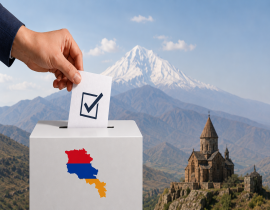
The first pluralist parliamentary elections were held in March 31, 1991 and were won by the Party of Labor of Albania, although the democratic opposition also managed to win seats in parliament, which meant that the communist government had to govern alongside non-communists.
However, the elections did not produce solutions to the country's economic problems and the situation continued to deteriorate, which led to a second parliamentary election on 22 March 1992, which brought the democratic opposition to power, ending 46 years of communist rule in Albania.
The coming to power of the democratic government in 1992 resulted in the reorientation of Albania's foreign policy towards the West and the Republic of Korea, prompting the DPRK government to sever diplomatic relations with the Albanian government and close its embassy in Tirana that same year.
Today, the DPRK relations with Albania, unlike other post-Eastern Bloc countries, such as Bulgaria or Poland, are almost non-existent. Despite this, on 28 November 2012, on the occasion of the 100th anniversary of Albania's Independence, the Chairman of the Standing Committee of the Supreme People's Assembly of the DPRK, Kim Yŏngnam (1928–2025), sent a congratulatory message to the President of Albania at the time, Bujar Nishani, wishing him ‘success in his work for the development and prosperity of the country’ (as Korean Central News Agency reported).
This congratulatory message remains the last official contact between the DPRK government and the post-communist Albanian government, symbolizing the swan's cry of what once was one of the most unique and curious intergovernmental (and personal) relationships in the Eastern Bloc.
- TAGS :
- China
- USSR
- Cold War
- geopolitics
- North Korea
- Albania
- TOPICS :
- Foreign policy
- Geopolitics
- History
- REGIONS :
- East Asia and Pacific
- Western Europe
About The Author
Eljanos Kasaj
Eljanos Kasaj
Expert
Eljanos Kasaj is a student from Albania, currently concluding his last year of Bachelor on the Faculty of Politology and Global Politics, with specialization on Global Security, at University of Wroclaw (Poland).
png-1773130770.png)
jpg-1599133320.jpg)