
Politicon.co
"Peace bridge": what does it take to cross it?
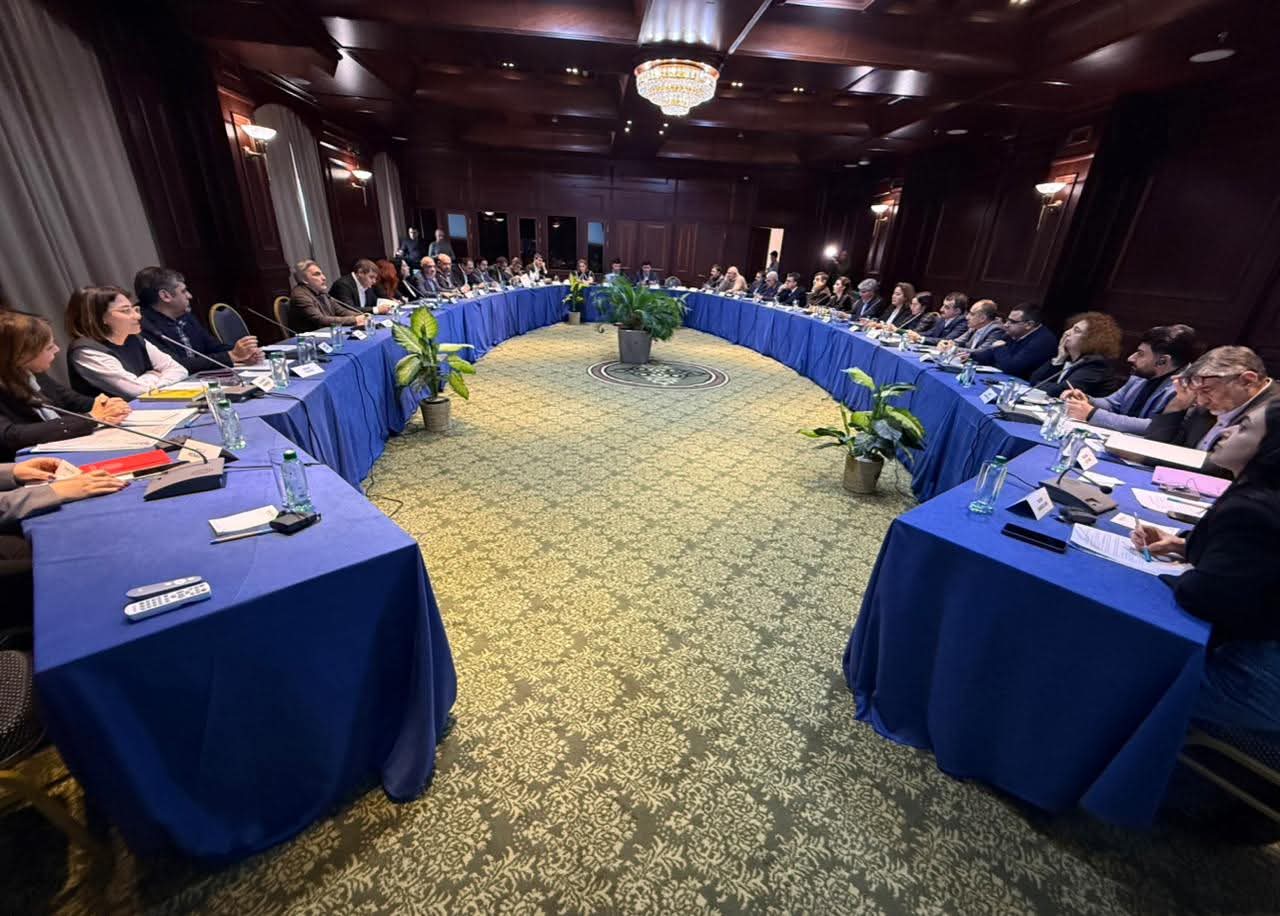
Last week was marked by a breakthrough in the Azerbaijani-Armenian dialogue process. A group of 19 people, including myself and my colleague Rusif Huseynov, crossed the land border in its only segment that has been already delimited and demarcated, to enter Armenia and participate in the 1.5-day seminar in the mountain resort of Tsaghkadzor. This historic event was held within the framework of the “Peace Bridge”, a civil society initiative that was launched in October last year to build trust between the two societies that still largely view each other through hostile lenses and carry multiple traumas. Coming in the footsteps of the political normalisation spearheaded by the Washington memorandum from August 8, 2025, the “Peace Bridge” aims to ensure sustainable communication between Azerbaijanis and Armenians that could at least alleviate these traumas and hostilities. The significance attached to this initiative by the governments - the event in Tsaghkadzor was attended by Armenia’s Deputy Foreign Minister Vahan Kostanyan and Head of Security Council Armen Grigoryan - shows that it is perceived as a real political game changer and a symbol of hope for a better, peaceful future.
The lively discussion that included four panels has demonstrated that hostile attitudes are being gradually replaced with genuine interest. As the conflict is finally over, Azerbaijanis and Armenians can sit at the table and talk to each other without running a risk of being perceived as traitors- and this factor in itself can enable honest communication and dispel the aura of political toxicity that has unfortunately haunted peace initiatives in Armenia for so long.
The biggest takeaway from the trip is the surprising speed with which pessimistic verdicts about the impossibility of proper co-existence between the two people- going back to the propagandist works of Armenian nationalists of the late 1980’s and echoed by former president of Armenia Robert Kocharyan in his interview where he claimed “the genetic incompatibility” of Azerbaijanis and Armenians, are being challenged. Just two years after Baku and Yerevan seemed to stand as far from peace as ever, participants at the meeting were pondering about the prospects for future partnership and building shared frameworks.
It has not been easy at all to reach this moment. Over the decades of the conflict, Azerbaijani and Armenian societies got totally alienated from each other, and the constant death toll along the line of contact never allowed passions to cool down a bit. Numerous rounds of negotiations mediated by various actors, be it Russia, Europe, US, other states or international organisations, have failed- some of them due to the overtly biased mediators’ attitudes, some due to their lack of commitment or capacity to exert influence on the ground, fight spoilers and reward success.
So, two conditions enabled Baku and Yerevan to escape this vicious circle. First of all, after the operation in September 2023, Azerbaijan fully restored its territorial integrity, which was formally recognised by Armenia at the Prague meeting a year before. In the absence of the point of contention, pervasive violence in the borderline area soon receded, and since 2024 no soldier has been killed there by a sniper bullet or in close combat. Secondly, in 2024 Baku put forward a proposal to pursue negotiations in a bilateral format. While it was initially met with undisguised scepticism always everywhere, Yerevan eventually agreed. And then it turned out that even with all the negative background, absence of regular communication formats, and perennially complex geopolitics of the region, the two countries can, against all odds, talk to each other and come to terms. Less than a year from the day Armenia and Azerbaijan signed their first ever intergovernmental agreement on the border delimitation and demarcation rules, President Aliyev and Prime Minister Pashinyan, together with US President Trump, shook hands as they held the initialed text of the would-be peace treaty, their photo immediately obtaining the status of the diplomatic hallmarks of 2025.
The discussion in Tsaghkadzor has emphasized which issues interest the Armenian civil society most of all. They include the timeline for the signing and ratification of the peace treaty, modalities of communications to be opened as part of normalisation process, the scope of economic cooperation, attitudes in Azerbaijani society towards the peace process, and Azerbaijan’s vision for building larger regional political platforms. Taken together, these concerns indicate to a major policy debate between the two major concepts of peace- “narrow” and “comprehensive”. While narrow peace basically means the absence of war and doesn’t necessarily imply substantial interaction between the parties, the latter notion envisages the development of thorough and wide-ranging ties whereas hostile narratives and perceptions are actively fought with. Transition from narrow to comprehensive peace is often painful for societies that are used to hate each other, and thus requires a profound coordination between the state and major social groups. This is why the change should be gradual and very careful, because any setback can destroy the fragile basis of normalisation.
Luckily, both groups understand this challenge very well. Utopian visions of the 1990’s didn’t work, and they are even more unlikely to work in the world whose order is crumbling in front of our eyes. The horrors of the war in Ukraine, or various Middle Eastern conflicts- both theaters being not that far from the South Caucasus- have emphasized the potential costs of persisting in maximalist positions. This context has boosted the acceptance of the peace discourse in the two countries which are now facing a unique window of opportunity. Where liberal idealism failed, pragmatic self-interest and strategic reserve may work wonders. Direct people-to-people communication now shall help to translate this willingness into nuanced visions of each other which distinguish between different backgrounds, beliefs and opinions instead of merging them into an indistinguishable “rival”.
- TAGS :
- Caucasus
- Azerbaijan
- Armenia
- peace
- Normalization
- TOPICS :
- Conflict and peace
- REGIONS :
- South Caucasus
About The Author

Murad Muradov
Murad Muradov is an independent researcher who has recently graduated from an MSc in Comparative Politics course at the London School of Economics. He also holds an MA degree in International Affairs from the ADA University (Azerbaijan). Muradov's spheres of interest includes the Politics of Europe, post-Soviet countries and the Middle East, as well as international political economy.

jpg-1781074374.jpg)

jpg-1599133320.jpg)