Politicon.co
C6 as a new configuration: Azerbaijan between the Caucasus and Central Asia
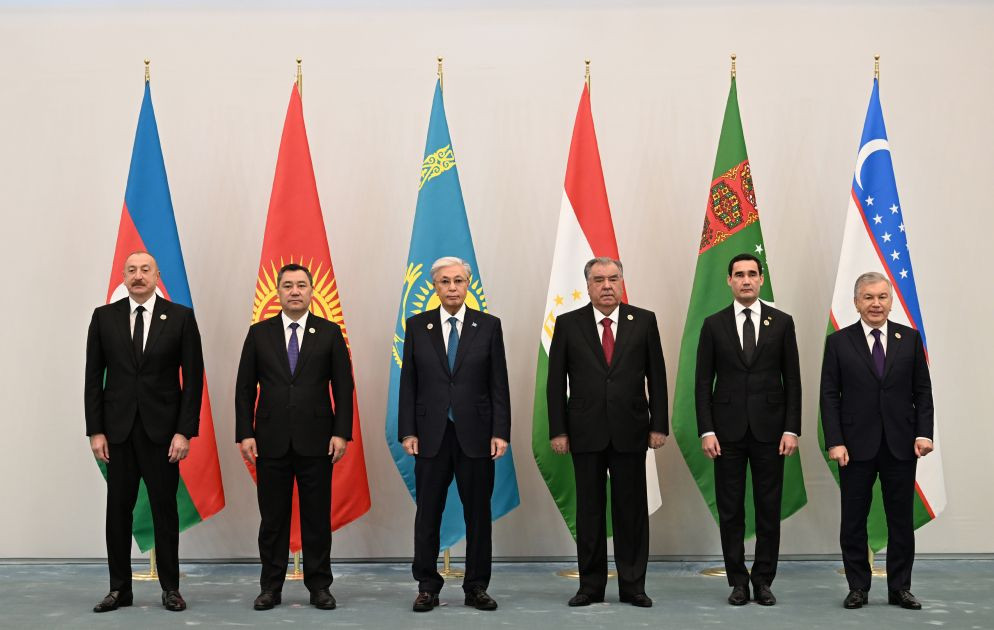
Inclusion of Azerbaijan in the consultative format of the leaders of Central Asia turned the classic formula “C5” into a framework “5+1”, formally expanding the region to six states (Euronews, 2025; JAMnews, 2025; Aze.Media, 2025).
While previously Baku was perceived as a predominantly South Caucasian actor, it is now embedded in the space that is increasingly referred to as “Cauc-Asia” – the link of Central Asia and the South Caucasus around the Caspian (Caucasus Watch, 2025; Caspian Post, 2025). The main theme of this text: “5+1 Framework” is not just a diplomatic branding, but an attempt to secure for Azerbaijan the status of an infrastructure-political hub through which Central Asia gains access to Europe and Turkey. The corridors themselves contibute to the reshaping patterns of regional cooperation and interaction (Times of Central Asia, 2026; Aze.Media, 2025; Commonspace.eu, 2026).
From C5 to “5+1”: institutionalization of “expanded Central Asia”
The consultative meetings of the five Central Asian leaders in recent years have evolved from one-off summits into a sustainable format with regular meetings, joint declarations and partial coordination on security and development issues (LINKS Europe, 2024).
The accession of Azerbaijan in 2025 to this format was formalized as a “new step of strategic integration”, and the Central Asian leaders themselves presented it as deepening regional unity, not as external enlargement (Euronews, 2025; Caliber.az, 2025; Baku.ws, 2025). Importantly, changing the formula is not neutral to regional identity. The question of whether Azerbaijan is a “Turkic” or a “Central Asian” actor becomes a subject of debate and a test for self-perception in the region (The Diplomat, 2025). It is a debate not only about symbolism but also about who has the right to participate in determining the norms and long-term rules of the game in Central Asia (The Diplomat, 2025; JAMnews, 2025).
Connectivity as power: Azerbaijan as a «hub» between Central Asia and the West
The key argument of the proponents of the “5+1” is that Azerbaijan provides Central Asia with a physical and political exit to the West, while routes through Russia and partly through Iran face sanctions and political restrictions (Times of Central Asia, 2026; Aze.Media, 2025). President Ilham Aliyev explicitly states that Central Asia “can count on Azerbaijan as a way to the West”, thus converting geography into an instrument of political influence (Times of Central Asia, 2026).
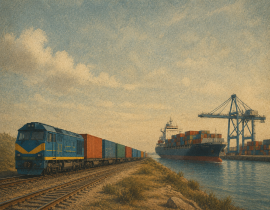
This coherence is multilayered. First, trans-Caspian transport routes: maritime lines between the ports on the western and eastern shores of the Caspian, railway links and motorways integrated into the Median/Trans-Caspian/Middle Corridor (Caspian Post, 2025; European Commission, 2025; European Commission, 2025). It is in these forums that the EU promotes the idea of the TCTC as a priority within its coherence agenda, involving both Central Asian states and Azerbaijan (European Commission, 2025).
Second, energy is in play. The expansion of Azerbaijani gas and oil exports against a background of declining supplies from Russia, discussions on green energy and hydrogen prospects reinforce Azerbaijan’s role as an energy hub through which Central Asian resources can pass (Commonspace.eu, 2026; Aze.Media, 2025).
Thus, “5+1” transforms the energy agenda from a set of bilateral contracts into part of a broader regional architecture where coordination of routes and volumes becomes a common issue (Caspian Post, 2025; Caucasus Watch, 2026).
Third, although digital connectivity is still less visible, discussions about submarine fibre optic lines and regional data hubs around the Caspian are already present in European and regional connectivity documents. (European Commission, 2025) If such projects are implemented, Azerbaijan will become not only a transport but also a digital hub for Central Asia on the way to European and Middle Eastern data and services markets (Caspian Post, 2025).
External actors and competing architectures
The “5+1” frame inevitably becomes an arena for the clash of several connectivity architectures, each of which claims to be normative. For the EU, it is a tool to implement the Global Gateway and a broader approach to “green” and sustainable connectivity aimed at bypassing Russian routes and reducing vulnerability to geopolitical shocks (European Commission, 2025).
Investment forum in Tashkent and emphasis on the Trans-Caspian Transport Corridor built into the logic of creating alternative supply routes for energy resources and cargo from Central Asia and the South Caucasus (European Commission, 2025).
For China, “5+1” is part of the western flank of the initiative “One belt - one road”, where Central Asia and the South Caucasus form a land bridge to Europe (Politicon, 2023 - OBOR review). China’s investment in the region’s infrastructure increases Beijing’s interest in the predictability and controllability of the Caspian axis, but also forces it to take into account the growing role of the EU and Turkey in the same corridors (Caspian Post, 2025).
For Turkey, the strengthening of Azerbaijan in Central Asia opens an opportunity to “materialize” Turkic rhetoric in the form of concrete logistical, energy and institutional projects linking Anatolia, the Caucasus and Central Asia (The Diplomat, 2025; Caspian Post, 2025). Through “5+1” Ankara de facto receives a platform on which its interests are represented indirectly - through Baku and common corridors (Aze.Media, 2025; Caliber.az, 2025).
Russia and Iran, on the other hand, see the strengthening of trans-Caspian connectivity and the “5+1” format as a threat to their routes and influence (Caucasus Watch, 2026). The reduction of transit through Russian territory, the discussion of bypass routes around Iran and the EU’s emphasis on alternative corridors objectively undermine these countries' role as transit hubs (European Commission, 2025; Aze.Media, 2025). Iran and Russia actively promote their projects (e.g., “North-South”), as well as attempt to politically and informally criticize trans-Caspian initiatives (Caucasus Watch, 2026; LINKS Europe, 2024).
This is the key feature of “5+1”: formally it is an internal regional format, but in fact it constantly takes into account and reworks the interests of external forces (Caucasus Watch, 2025; Caspian Post, 2025).
Risks and vulnerabilities "5+1 Framework"
Despite the optimistic rhetoric, “5+1” contains a whole set of structural risks. First, the infrastructure concentration. The more cargo, energy and data are tied to the Caspian node and Azerbaijani routes, the more vulnerable the entire system becomes to local failures - from technical accidents to targeted diversions or political crises (Caspian Post, 2025; Commonspace.eu, 2026). As much of Central Asia’s export logistics is gradually shifting from the Russian-Iranian route to the Trans-Caspian route, the cost of any disruption increases (Times of Central Asia, 2026; European Commission, 2025).
Second, institutional fragility. The consultative format and policy statements provide a useful framework but do not replace legally binding mechanisms for coordinating tariffs, safety standards, capacity allocation and dispute resolution (JAMnews, 2025; Euronews, 2025). Without deepening the institutionalization of “5+1” risks remaining a set of parallel bilateral agreements, which are conveniently presented under a single brand name, but do not provide sustainable collective management of infrastructure (Aze.Media, 2025a; AIR Center, 2025).
Third, the internal resilience of regimes. All the “six” states face serious socio-economic challenges, and in some cases limitations of political participation and rights (Caucasus Watch, 2026; Global Initiative, 2025). Infrastructure projects are often used as a tool to legitimize the operating elites – “corridors” promise jobs, investment and modernisation, but failure or uneven distribution of benefits can lead to public discontent (Commonspace.eu, 2026; LINKS Europe, 2024).
Finally, there is the risk of geopolitical overload. As the EU, China, Turkey, Russia and Iran try to use "5+1" as a channel of influence, it becomes increasingly difficult for Central Asian capitals and Baku to maintain balance without clearly articulated regional strategy (Caucasus Watch, 2025; Caspian Post, 2025; The Diplomat, 2025).
Conclusion: “5+1” as a test of regional subjectivity
“5+1 Framework” is, in essence, a test on the ability of Central Asia and Azerbaijan to convert geographical connectivity into political entity, not only into transit collections (Caucasus Watch, 2025; Aze.Media, 2025). If the format remains predominantly symbolic, it will strengthen the short-term image of regional unity, but little change in the structural dependence on decisions taken in Brussels, Beijing, Ankara, Moscow or Tehran (LINKS Europe, 2024; European Commission, 2025).
If the “5+1” is accompanied by real institutionalization - transparent rules on corridor management, arbitration mechanisms, coordination of tariff and climate policies - it can become one of the rare examples of how post-Soviet regions create their own sustainable architectures, not just adapt to others (European Commission, 2025; Caucasus Watch, 2026; Caspian Post, 2025).
The key research question, which remains open, is whether Azerbaijan will become a convenient transit bridge for Central Asia within the framework of “5+1” and “Cauc-Asia”, or is it about forming a new center of power, able to dictate the rules of the game in the extended Caspian space?
Sources
- Caucasus Watch. (2025, December 27). Central Asia’s embrace of Azerbaijan: The rise of Cauc-Asia. Caucasus Watch. https://caucasuswatch.de/en/insights/central- asias-embrace-of-azerbaijan-the-rise-of-cauc-asia.html
- Aze.Media. (2025, September 7). From “5+1” to six-state unity: Azerbaijan’s Central Asian unity. Aze.Media. https://aze.media/from-51-to-six-state-unity- azerbaijans-central-asian-unity/
- AIR Center. (2025, September 7). From “5+1” to six-state unity: Azerbaijan’s Central Asian unity. AIR Center – Center of Analysis of International Relations. https://aircenter.az/en/single/from-51-to-six-state-unity-azerbaijans- central-asian-unity-1901
- JAMnews. (2025). Azerbaijan draws closer to Central Asia: What it means for the South Caucasus. JAMnews. https://jam-news.net/azerbaijan-joins-central-asia- advisory-council-what-it-means-for-south-caucasus/
- Caliber. (2025, October 21). Format “6”: Azerbaijan and Central Asia deepen strategic integration. Caliber.az. https://caliber.az/en/post/format-6-azerbaijan- and-central-asia-deepen-strategic-integration
- Baku.ws. (2025, November 16). Azerbaijan – Central Asia: From “5+1” to a unified “6”. Baku.ws. https://baku.ws/en/politics/azerbaijan-central-asia-from-51-to-a- unified-6
- The Diplomat. (2025). Turkic or Central Asian? Azerbaijan’s entry tests the region’s identity. The Diplomat. https://thediplomat.com/2025/12/turkic-or-central-asian- azerbaijans-entry-tests-the-regions-identity/
- Times of Central Asia. (2026, January 5). Central Asia can depend on Azerbaijan for path to West, Aliyev says. Times of Central Asia. https://timesca.com/central-asia- can-depend-on-azerbaijan-for-path-to-west-aliyev-says/
- Aze.Media. (2025). Zangezur Corridor to serve as vital link connecting continents: President Aliyev. Aze.Media. https://aze.media/zangezur-corridor-to-serve-as- vital-link-connecting-continents/
- Euronews. (2025, November 16). Central Asian leaders welcome Azerbaijan as new member of consultative format.
- Euronews. https://www.euronews.com/2025/11/16/central-asian-leaders-deepen- regional-integration-as-azerbaijan-joins-consultative-format
- Commonspace.eu. (2026, January 6). Opinion: Azerbaijan energy sector in 2025 has been innovative and dynamic.
- Commonspace.eu. https://www.commonspace.eu/opinion/opinion-azerbaijan- energy-sector-2025-has-been-innovative-and-dynamic
- Aze.Media. (2025, November 15). Aliyev: A unified geo-economic space emerging with Central Asia. Aze.Media. https://aze.media/aliyev-a-unified-geo-economic- space-emerging-with-central-asia/
- European Commission. (2025, November 26). Trans-Caspian Transport Corridor and connectivity investors forum: The EU advances cross-regional connectivity in Tashkent. European Commission. https://enlargement.ec.europa.eu/news/trans- caspian-transport-corridor-and-connectivity-investors-forum-eu-advances-cross- region_en
- European Commission. (2025, November 25). EU advances economic partnerships and the connectivity agenda in Central Asia and the South Caucasus. European Commission. https://enlargement.ec.europa.eu/news/eu-advances-economic- partnerships-and-connectivity-agenda-central-asia-and-south-caucasus_en
- Caspian Post. (2025, November 16). From the Caspian to Central Asia: How Azerbaijan strengthens its strategic footprint. Caspian Post. https://caspianpost.com/opinion/from-the-caspian-to-central-asia-how- azerbaijan-strengthens-its-strategic-footprint
- Caspian Post. (2025). The Rise of the Central Asia–South Caucasus axis in Eurasian geopolitics. Caspian Post. https://caspianpost.com/opinion/central-asia- azerbaijan-and-georgia-shaping-future-map
- Caucasus Watch. (2026, January 14). Reshaping the South Caucasus: New realities and shifting power in 2025. Caucasus Watch. https://caucasuswatch.de/en/insights/reshaping-south-caucasus-new- realities-and-shifting-power-in-2025.html
- Global Initiative Against Transnational Organized Crime. (2025, October 15). The commanding heights of the South Caucasus underworld. Global Initiative. https://globalinitiative.net/analysis/the-commanding-heights-of-the- south-caucasus-underworld/
- LINKS Europe. (2024, December 31). Action plan 2025: The South Caucasus in a changing world. LINKS Europe. https://links-europe.eu/action-plan-2025
- TAGS :
About The Author

Hasan Seyidli
Hasan Seyidli a young professional working in the fields of international security, conflictology, diplomacy, and global political economy, with around six years of academic and professional engagement in these areas. He is currently pursuing a Master's degree in Strategy and International Security at the University of Bonn in Germany. He is a member of the German Council on Foreign Relations (DGAP).


jpg-1781074374.jpg)
jpg-1599133320.jpg)